
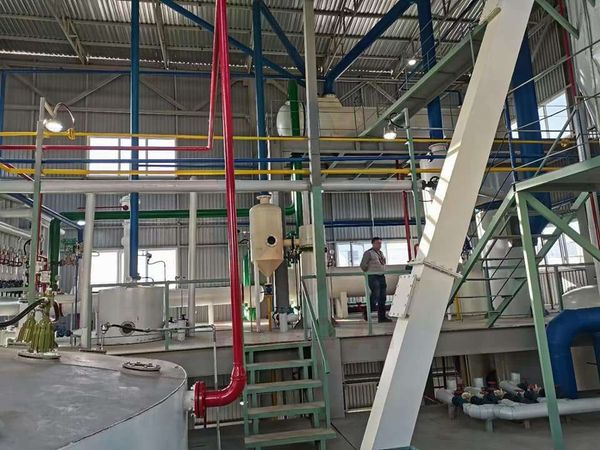
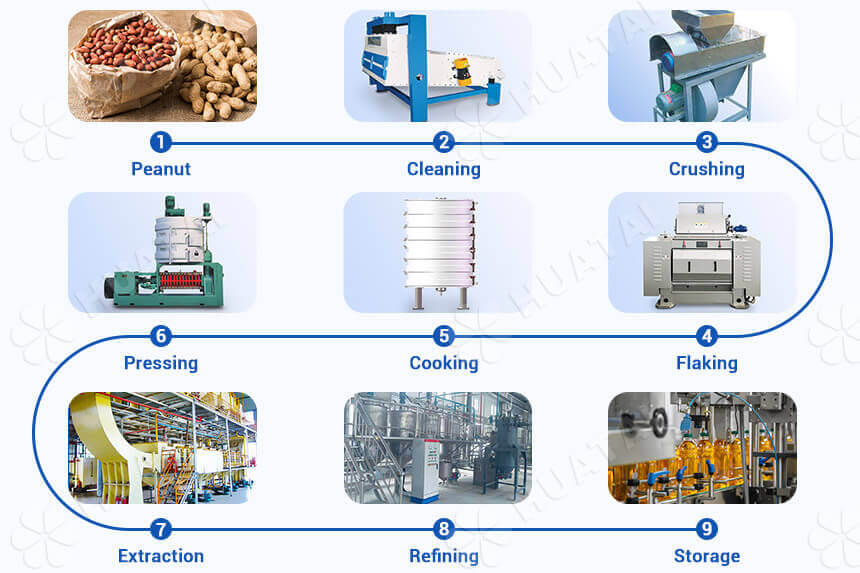
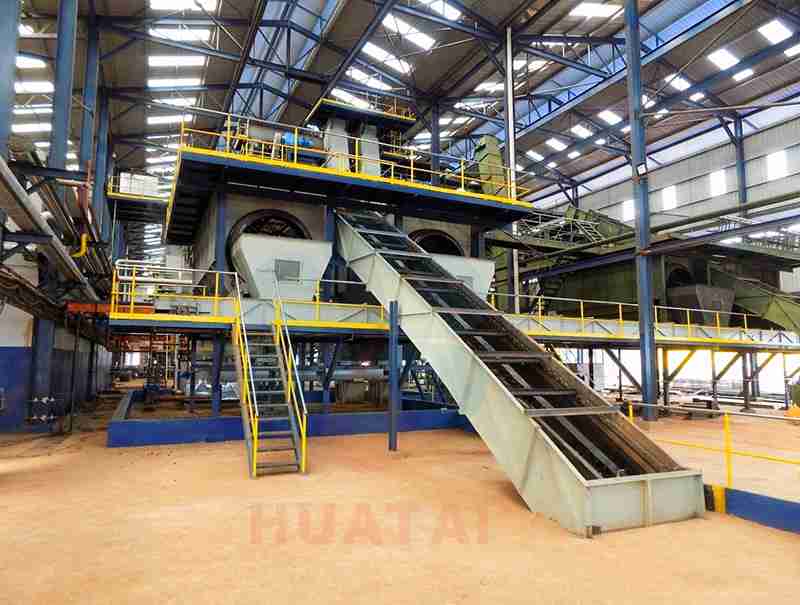
The clear, golden soybean oil found in kitchens is a staple for home cooking. But what journey does an ordinary soybean take to become the cooking oil on our tables? Today, we step inside a soybean oil production plant to reveal the entire manufacturing process, from raw material to finished product.
1. Three Mainstream Soybean Oil Production Methods
Currently, there are three primary production methods: mechanical pressing, solvent extraction, and a combination of the two known as prepressing-extraction.
Mechanical Pressing: This method separates oil from soybeans through physical pressure. No chemical solvents are used, preserving the soybean's natural flavor.
Solvent Extraction: This process uses an organic solvent (such as n-hexane) to extract oil from soybean flakes through mechanisms like wetting, permeation, and molecular diffusion. It offers a very high oil yield and is suitable for large-scale industrial production.
Prepressing-Extraction: This method extracts a portion of the oil via pressing first, followed by solvent extraction of the remaining press cake, combining the advantages of both processes.
2. Step One: Raw Material Pre-treatment-The First Line of Defense for Quality
Regardless of the production method used, soybeans undergo rigorous pre-treatment upon entering the soybean oil factory.
Cleaning and Impurity Removal: Freshly harvested soybeans often contain impurities such as stones, soil, metal fragments, and weed seeds. Factories use equipment like cleaning screens, magnetic separators, and destoners—combined with air suction systems-to efficiently remove these impurities.
Crushing and Softening: After cleaning, the soybeans are cracked into segments. They are then softened by adjusting moisture and temperature to achieve the ideal elasticity and plasticity, preparing them for the subsequent flaking process.
Flaking: After softening, the soybeans are fed into a flaking mill and pressed into thin, uniform flakes. This step is crucial; the thinner the flakes, the more thoroughly the cell walls are ruptured, resulting in higher oil extraction efficiency.
Huatai's complete soybean pretreatment equipment line accommodates capacities ranging from 20 to 5,000 tons per day and can be flexibly configured based on the client's scale of operations.
3. Step Two: Oil Extraction-The Core Oil-Producing Stage
The pretreated soybean flakes proceed to the oil extraction stage.
Pressing Method: The flakes enter a screw oil press, where the oil is squeezed out of the cells under immense mechanical pressure. Huatai's screw-type soybean oil presses offer a daily processing capacity increased to 25 tons (up from 15 tons) and feature an 18% reduction in energy consumption.
Solvent Extraction Method: The flakes enter an extractor and come into full contact with an organic solvent, which dissolves the oil from the soybeans to form a "miscella" (a mixture of oil and solvent). Subsequently, the miscella undergoes processes such as evaporation and stripping to separate the solvent from the oil, yielding crude oil. The separated solvent is condensed, recovered, and recycled. Huatai's soybean oil extraction equipment utilizes a multi-stage extraction process and is equipped with an intelligent control system for real-time monitoring of parameters such as temperature and pressure. The evaporation system effectively minimizes residual solvent in the meal and reduces overall solvent consumption.
4. Step Three: Oil Refining-Transforming "Crude Oil" into "Grade 1 Oil"
Oil obtained via pressing or solvent extraction is known as "crude oil" and contains various impurities, such as phospholipids, free fatty acids, moisture, pigments, and odor-causing substances. These impurities not only affect taste and quality but can also lead to rancidity and spoilage. Therefore, crude oil must undergo refining to become edible oil that meets national standards.
Huatai Group's Grade 1 soybean oil refining equipment involves the following core processes:
1) Degumming (Hydration Degumming): Hot water or phosphoric acid is added to the crude oil, causing gum-like impurities (such as phospholipids) to absorb water and coagulate; these are then removed via centrifugal separation.
2) Deacidification (Alkali Refining): Alkali solution is added to neutralize free fatty acids, forming soapstock that is subsequently separated out, thereby reducing the oil's acid value.
3) Bleaching (Adsorption Bleaching): Adsorbents such as activated bleaching earth are added to remove pigments and other impurities from the oil.
4) Deodorization (Vacuum Deodorization): Steam is introduced under high-temperature and high-vacuum conditions to strip away odor-causing substances along with the steam.
Every batch of refined soybean oil undergoes rigorous sampling and testing; only oil meeting the Grade 1 soybean oil standard is permitted to enter the bottling workshop. Huatai's fully continuous soybean oil refining production line boasts a single-line daily processing capacity of up to 500 tons and achieves a 15%–20% reduction in energy consumption.
5. Huatai's Strength: 38 Years of Dedication, Empowering the Global Grain and Oil Industry
Henan Huatai Grain & Oil Machinery Co., Ltd., established in 1988, is a large-scale manufacturer of grain and oil machinery, integrating R&D, design, manufacturing, installation, and after-sales service. The company covers an area of 100,000 square meters and operates 12 modern, intelligent equipment manufacturing workshops. Its product portfolio spans the entire process-from oilseed pretreatment and pressing to solvent extraction and refining—with equipment exported to over 70 countries and regions.
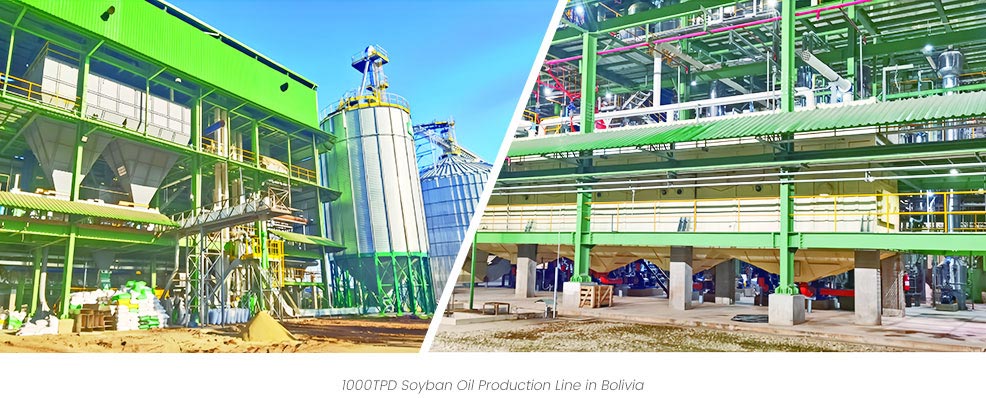
In the global market, Huatai has constructed many intelligent soybean oil processing plants. Representative projects include a complete soybean oil production line with a daily capacity of 200 tons in Heilongjiang province, China; a complete soybean processing line in Bolivia featuring 1,000 tons/day pretreatment and 200 tons/day refining capacities; and a 100 tons/day organic soybean oil pressing project in Togo.
From a single soybean in the field to a drop of high-quality oil on the dining table, the journey relies on a modern production line that integrates cleaning, crushing, flaking, extraction, and refining. Henan Huatai Cereals & Oils Machinery Co., Ltd. stands as a trusted, professional enabler within this supply chain-safeguarding the quality and safety of every drop of soybean oil through 38 years of craftsmanship and innovation.
Website: https://www.oilpresscn.com/
Email: info06@cnoilmachine.com