
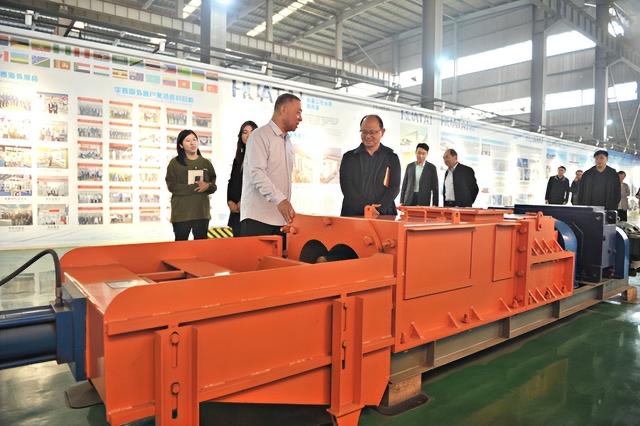
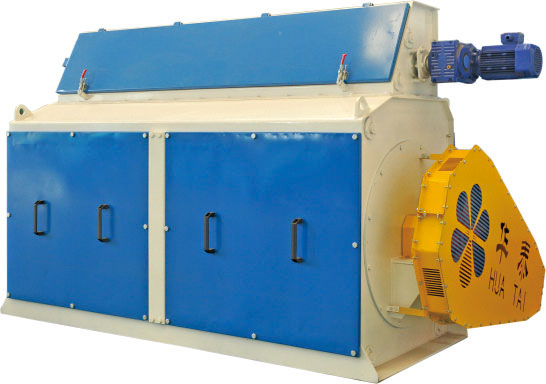

In the realm of high-end edible oils, walnut oil is hailed as the "Olive Oil of the East," distinguished by its rich nutritional profile and unique health benefits. As consumer interest in healthy diets continues to rise, the market demand for walnut oil is experiencing sustained growth. The core stage of walnut oil processing-the technology used to separate oil from the nuts-directly determines the oil yield, product quality, and production costs. As a benchmark enterprise in China's grain and oil machinery manufacturing sector, Henan Huatai Cereals and Oils Machinery Co., Ltd. leverages over 38 years of accumulated technical expertise to provide global clients with one-stop, turnkey solutions-ranging from standalone equipment to complete walnut oil production lines.
1. Overview of Walnut Oil Separation Technologies
Separating oil from walnuts refers to the technical process of extracting the oil contained within walnut kernels using either physical or chemical methods. Walnut kernels boast an oil content ranging from 65% to 70%, ranking them first among all woody oil-bearing crops. Currently, the primary technologies employed for separating oil from walnuts include the following:
Pressing Method: This category encompasses both screw pressing and hydraulic pressing techniques. It is further subdivided into hot pressing and cold pressing, relying on mechanical pressure to physically squeeze the oil out of the walnut kernels.
Extraction Method: This technique utilizes organic solvents to dissolve the oil, which is then recovered by evaporating and separating the solvent. This method typically yields a higher oil extraction rate.
Each of the aforementioned methods possesses its own distinct advantages and disadvantages: the pressing method offers lower operational costs and higher product safety but yields a comparatively lower oil extraction rate; conversely, the extraction method delivers a high oil yield but carries the inherent risk of residual solvent contamination. Consequently, selecting the most appropriate technical solution-based on the specific characteristics of the raw materials and the intended market positioning of the final product-remains a pivotal challenge for enterprises engaged in walnut oil processing.
2. Huatai Oil Machinery's Comprehensive Walnut Oil Extraction Process
Addressing the specific characteristics of walnut kernels-namely their high oil content and susceptibility to oxidation-Henan Huatai Cereals and Oils Machinery Co., Ltd. has developed a comprehensive technical solution centered on low-temperature physical pressing. In this process, the oil extraction temperature is strictly maintained below 60°C, effectively preventing the loss of vital nutrients. As a result, the product's acid value remains below 0.5 mg KOH/g, thereby meeting rigorous international standards for edible oils. The company has established an end-to-end technical ecosystem encompassing "Pre-treatment-Pressing-Refining-High-Value Utilization of By-products," ensuring that the value of every single walnut is maximized to its fullest potential.
1) Raw Material Pre-treatment: The First Gatekeeper of Quality Assurance
Whether the technology used to extract oil from walnuts achieves optimal results depends largely on the quality of the pre-treatment process. Huatai's walnut oil production lines feature a precise, four-step pre-treatment system: "Shelling-Washing-Crushing-Separation."
2) Core Pressing Technology: A Physical Process That Locks in Natural Essence
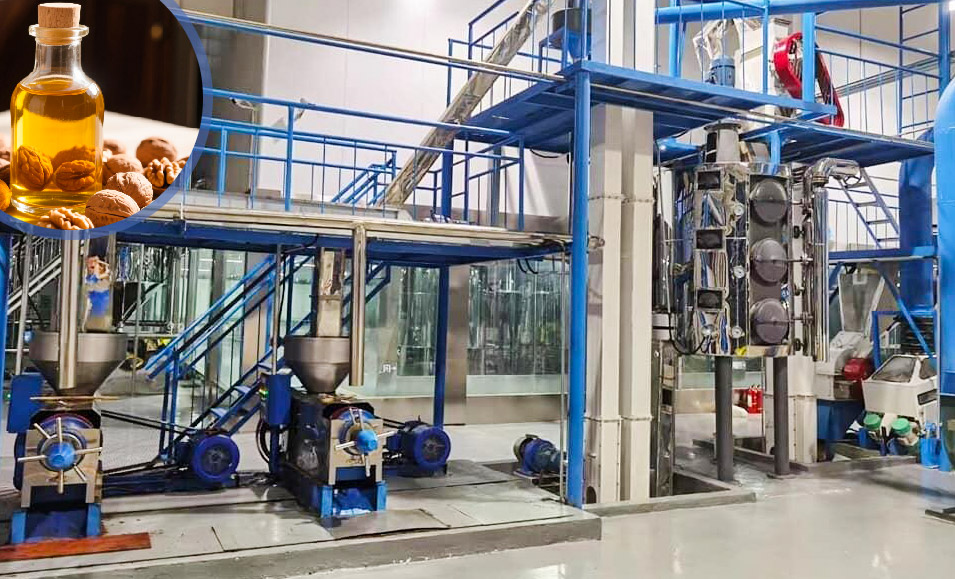
After pre-treatment, the walnut kernels enter the core stage of value transformation. Huatai’s walnut oil production lines can be flexibly configured to meet specific client requirements; single-line daily processing capacities range from 10 to 1000 tons, providing comprehensive equipment solutions for large-scale walnut oil processing plants.
Huatai employs a new generation of intelligent screw oil presses that gently extract oil from walnut kernels under low-temperature conditions by precisely regulating pressing temperature and pressure. Compared to traditional hot-pressing methods, this technology boosts oil yield by over 15% while producing an oil with a clearer color and purer flavor. In practical application, Huatai's walnut oil equipment features a modular design, capable of meeting diverse configuration needs ranging from standalone units to complete, integrated production lines.
3) Refining Process: A Four-Step Procedure for Quality Enhancement
Separating oil from walnuts is merely the first step; the refining stage determines the final product's quality grade. The crude oil extracted by Huatai's presses undergoes intensive processing through four major stages: degumming, deacidification, decolorization, and deodorization. During the alkaline refining (deacidification) stage, an alkaline solution is added within a constant-temperature environment of 60°C to react with free fatty acids, forming soapstock granules; this is followed by a hot water wash to thoroughly remove residual soapstock and impurities. The vacuum decolorization stage involves adding activated carbon or white clay within a vacuum environment of ≥700 mmHg to remove pigments. Finally, high-temperature deodorization is performed under a high vacuum of 755 mmHg and temperatures ranging from 220°C to 240°C to completely eliminate volatile odor-causing substances, resulting in a healthy edible oil that meets national standards.
4) High-Value Utilization of By-products: Expanding the Industrial Value Chain
In traditional walnut processing, the oil cake (pomace) remaining after oil extraction is often disposed of at low cost, typically as animal feed. Huatai Innovation has introduced subcritical low-temperature extraction technology to establish a dual-chain production system encompassing both "oil pressing" and "protein extraction." By extracting proteins from oil cakes and meal under ambient temperature and low-pressure conditions, the process ensures that the non-denaturation rate of water-soluble proteins in the meal exceeds 95%, while residual oil content remains below 1%. The resulting high-quality walnut protein can be directly utilized in the food and health supplement sectors, thereby significantly enhancing the overall economic efficiency of walnut oil processing.
3. Why Choose Henan Huatai Cereals and Oils Machinery Co., Ltd.?
Established in 1988, Henan Huatai Cereals and Oils Machinery Co., Ltd. is a large-scale enterprise dedicated to the manufacturing of grain and oil machinery, integrating R&D, design, manufacturing, and installation services. In the realm of technological R&D, Huatai is supported by a professional scientific research team. The company's products currently serve over 1,000 oil processing enterprises worldwide and are exported to more than 70 countries and regions.
Conclusion
Technologies for separating oil from walnuts are evolving toward greater low-temperature efficiency, precision, and intelligence. Leveraging its advanced technical solutions, comprehensive end-to-end service capabilities, and robust R&D strength, Henan Huatai Cereals and Oils Machinery Co., Ltd. has emerged as an industry benchmark in the field of walnut oil processing equipment. Whether through continuous innovation in low-temperature physical pressing technologies or its pioneering initiatives in the high-value utilization of by-products, Huatai provides solid technical support for the transformation and upgrading of the walnut oil industry. If you are seeking high-quality technical solutions and equipment for walnut oil extraction, Huatai Oil Machinery is a partner you can trust.
Website: https://www.oilpresscn.com/
Email: info06@cnoilmachine.com