

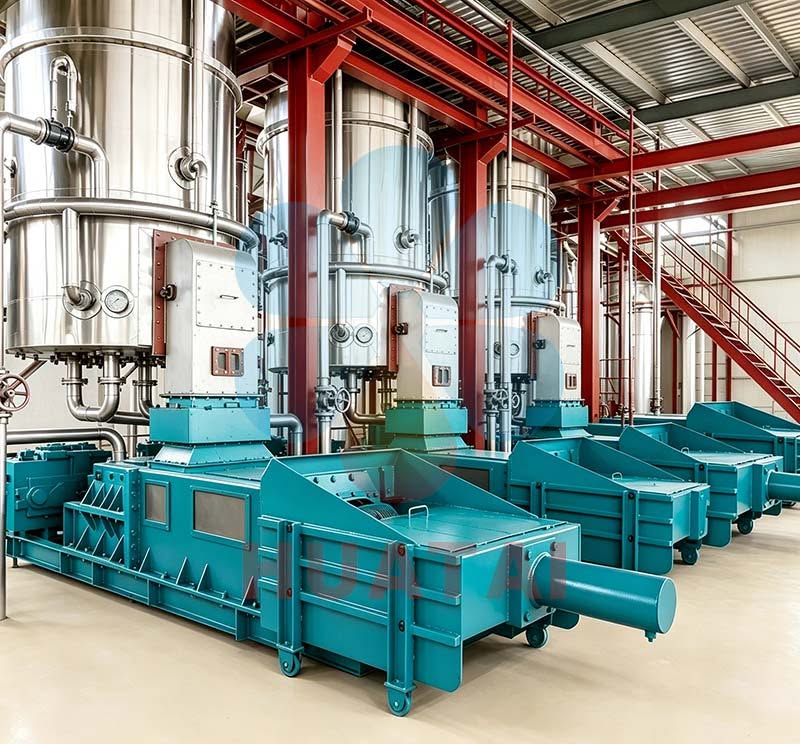
In the sunflower seed oil production process, the pre-treatment stage is fundamental to determining the oil yield and final product quality of the entire line. As the core unit of the sunflower seed pre-treatment line, the dehuller's installation quality directly impacts shelling efficiency, the whole-kernel rate, and the stability of subsequent flaking and cooking processes. Henan Huatai Cereals & Oils Machinery Co., Ltd.-a national-level "Little Giant" enterprise recognized for specialization, refinement, uniqueness, and innovation-has accumulated extensive design and engineering experience in sunflower seed pre-treatment equipment. Drawing on the technical features of Huatai Oil Machinery's centrifugal shellers designed specifically for sunflower seeds, this article outlines the key installation points for reference by sunflower oil plant equipment management and installation personnel.
1. Pre-installation Foundation Preparation
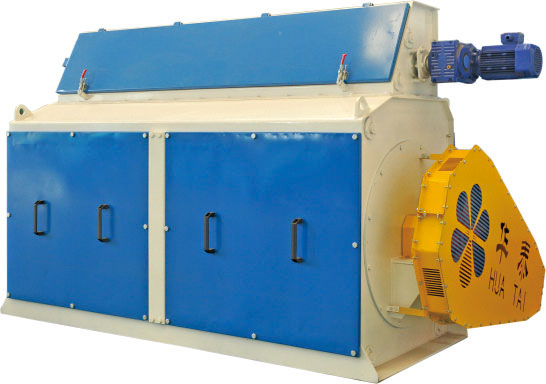
Installing a dehuller involves more than simply positioning and securing the unit. Huatai Oil Machinery’s centrifugal shellers for sunflower seeds (HTBKJ series) offer processing capacities ranging from 3.5 to 12.5 t/h. Constructed with thickened, wear-resistant plates and a high-strength frame, the unit is heavy, necessitating specific requirements regarding foundation load-bearing capacity and levelness.
Before installation, verify that the concrete foundation has fully cured and meets design strength requirements. Prior to positioning the equipment, remove any laitance or oil stains from the foundation surface and check that the locations and depths of the anchor bolt holes align with the equipment base. For Huatai dehullers equipped with vibration-damping pads, these pads must be evenly distributed between the frame and the foundation to ensure uniform load distribution across all support points; this prevents frame deformation or increased operational vibration caused by localized gaps or lack of support.
Additionally, the installation site should be kept dry and well-ventilated. Shellers have specific requirements for the protection of electrical control components; humid environments can easily lead to terminal oxidation and electrical component failure.
2. Leveling and Fastening
Once the equipment is in position, leveling is one of the most critical steps in the installation process. Huatai dehullers utilize the principle of centrifugal impact to separate shells from kernels, with the rotor disc spinning at high speeds. If the machine body is tilted, material distribution within the centrifugal channels becomes uneven, causing off-center loading on the impact plates; this, in turn, adversely affects the shelling rate and the whole-kernel rate. Use a precision level to check the machine frame in both longitudinal and transverse directions. Adjust the height of the shims or vibration-damping pads to ensure the levelness in both directions remains within the permissible tolerance. Once leveled, tighten the anchor bolts gradually in a diagonal sequence to prevent stress concentration on the frame caused by overtightening one side. After tightening, re-check the level to confirm there has been no change.
3. Inspection of the Drive System and Rotor
The drive system is the power core of the dehuller. During installation, check the coaxiality of the motor and main shaft. For belt-driven models, verify proper pulley alignment and moderate belt tension-excessive looseness causes slippage and rotational speed fluctuations, while excessive tightness increases bearing load.
Inspection of the rotor assembly is equally critical. The clearance between the rotor and the impact plate of the Huatai dehuller is a key parameter affecting dehulling performance. During installation, ensure the rotor rotates freely without binding; manually rotate it several times to check for any abnormal friction sounds. As the impact plate is a key wear part, verify the installation angle and tightness of each plate to ensure no displacement occurs under high-speed material impact. After installation, run the machine without load for several minutes; proceed to load testing only after confirming smooth operation and the absence of abnormal noise.
4. Integration of Feeding and Separation Systems
The dehuller does not operate in isolation; its installation must be coordinated with the feeding device and the downstream kernel-shell separation system. The feed adjustment mechanism of the Huatai dehuller typically features adjustable baffles or valves; ensure the feed chute is aligned with the inlet to prevent material flow bias, which could cause uneven rotor wear.
Within the overall sunflower seed pretreatment line, the dehuller outlet usually connects directly to a kernel-shell separation screen or an air separation system. During installation, ensure the chute's inclination angle suits the flow characteristics of the sunflower kernels and shells to prevent material accumulation or clogging. Huatai integrates a multi-stage sorting system into its sunflower seed pretreatment line; following dehulling, precise separation of kernels and shells is achieved through air separation and screening. Sufficient space for maintenance and adequate clearance for piping connections must be reserved during the installation phase.
For sunflower oil production lines equipped with a kernel recirculation system, the return piping for unhulled seeds must ensure smooth flow, and the angle of the return chute should facilitate gravity flow, minimizing reliance on mechanical conveyance.
5. Electrical and Safety Protection
Electrical installation must comply with dust- and moisture-proofing requirements for grain and oil processing workshops. The electrical control system for the Huatai dehuller should be located in a dry, well-ventilated, and easily accessible area. Upon completion of wiring, insulation resistance for all motors must be checked, and reliable grounding confirmed.
Regarding safety, protective guards must be installed over exposed rotating parts (such as pulleys and couplings). In accordance with industry standards for sunflower seed dehullers, clear rotor rotation indicators must be displayed on the machine casing to prevent equipment damage caused by reverse rotation due to operational error. Additionally, large inspection doors must operate smoothly and seal effectively after installation, facilitating quick daily maintenance of wear parts such as the rotor, flow deflectors, and impact plates.
6. Commissioning and Initial Parameter Adjustment
Final verification of installation quality is achieved through both no-load and load-bearing test runs. Key areas of focus during the no-load test include: correct rotor rotation direction, smooth operation, normal bearing temperature rise, and the absence of abnormal vibration or noise.
During the load-bearing test phase, the feed rate and impact plate clearance must be initially adjusted based on the variety, particle size, and moisture content of the incoming sunflower seeds. If excessive shell content is found in the kernels, the airflow rate of the air separation system should be checked for compatibility; if the whole-kernel rate is suboptimal, the rotor speed and the condition of the impact plates should be re-evaluated. Huatai Oil Machinery typically provides guidance on installation and commissioning; users should maintain communication with the Huatai technical team during the test phase to ensure the equipment operates within optimal parameter ranges.
Conclusion
The installation quality of the sunflower seed dehuller is fundamental to the overall operational efficiency of the sunflower seed pretreatment production line. Every step-from foundation preparation and leveling to drive alignment and system integration—must be executed in strict accordance with established specifications. Huatai Oil Machinery has long specialized in the grain and oil machinery sector. Its centrifugal dehuller, designed specifically for sunflower seeds, prioritizes high efficiency, low breakage, stable and quiet operation, and ease of maintenance; its performance has been proven in numerous sunflower oil processing projects worldwide. Proper installation is not only a prerequisite for the equipment's long-term, stable operation but also ensures that the technical advantages of the Huatai dehuller are fully realized, leading to improved whole-kernel rates and oil yields.
Website: https://www.oilpresscn.com/
Email: info06@cnoilmachine.com