
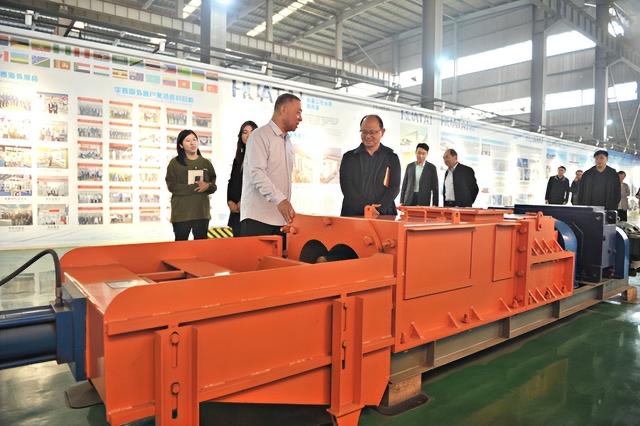
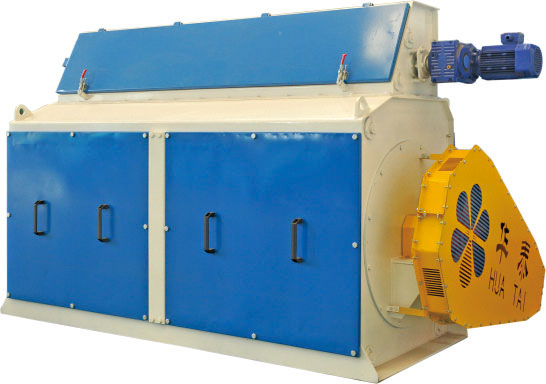

Palm oil, alongside soybean oil and rapeseed oil, is known as one of the "world's three major vegetable oils" and ranks among the most produced and consumed oils globally. However, crude palm oil (CPO)-freshly pressed from oil palm fruit-contains impurities such as phospholipids, free fatty acids, pigments, gums, and odor-causing substances, rendering it unsuitable for direct consumption. So, how is palm oil refined? This article provides a detailed breakdown of the complete palm oil refining process and offers an in-depth look at this critical stage of production through the lens of the one-stop solutions provided by Henan Huatai Cereals & Oils Machinery Co., Ltd.
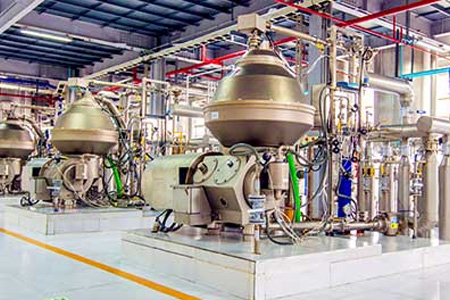
1. Four Core Steps in Palm Oil Refining
Producing food-grade palm oil requires a comprehensive refining process that includes degumming, deacidification, bleaching, and deodorization to yield the final product. These processing steps are designed to enhance the oil's quality and safety, ensuring it meets edible standards. The specific steps are as follows:
1) Degumming — Removing Gummy Impurities
Degumming is the initial stage of refining; its purpose is to remove water-soluble impurities-such as phospholipids and gums-from the crude oil, thereby preventing oxidation and spoilage. Common degumming methods include water degumming and acid refining. Huatai Oil Machinery's palm oil refining lines integrate core degumming technology, utilizing a washing method to effectively separate soap stock from the oil mixture and prepare it for subsequent processing stages.
2) Deacidification — Reducing Free Fatty Acid Content
The deacidification process aims to neutralize free fatty acids (FFA) and lower the acid value, thereby improving the oil's stability and safety for consumption. There are two primary methods for deacidifying palm oil: chemical refining (neutralization with alkali) and physical refining (steam distillation). Huatai Oil Machinery possesses extensive expertise in physical refining technology; its proprietary low-temperature deacidification process can reduce the acid value to below 0.1 mg KOH/g while achieving 30% greater energy efficiency compared to traditional methods.
3) Bleaching — Enhancing Oil Color and Purity
The bleaching process utilizes adsorbents (such as activated bleaching earth, activated carbon, or ion exchangers) to remove pigments, residual soaps, and metal ions from palm oil, thereby improving its color and purity. This step is crucial for producing high-quality, light-colored palm oil. Huatai Oil Machinery's palm oil refining equipment employs advanced adsorption and filtration technologies during the bleaching stage to ensure the oil achieves a clear, bright appearance.
4) Deodorization — Removing Odors for a Pure Flavor Profile
Deodorization is a pivotal step in the refining process for quality enhancement. Deacidified palm oil undergoes vacuum distillation and steam stripping at high temperatures (typically 200°C–270°C) to eliminate "beany" or unpleasant odors and other low-boiling-point volatile substances. Huatai Oil Machinery utilizes steam-jet deodorization technology, raising the finished oil's smoke point to over 230°C—meeting edible oil standards. The resulting deodorized palm oil has a mild taste, produces minimal smoke during cooking, and offers excellent flavor and mouth feel.
2. Palm Oil Refining and Fractionation: Keys to Maximizing Value
It is worth noting that palm oil refining is often followed by fractionation. Palm oil possesses unique multi-melting-point characteristics; fractionation allows the refined oil to be separated into products with different melting points (such as soft oil, and stearin), thereby significantly increasing economic value. While refining primarily focuses on enhancing the safety and quality of palm oil, fractionation aims to produce materials with specific physical properties to meet diverse industrial and food processing needs. Combining these processes not only maximizes the utility of palm oil but also boosts the enterprise's economic returns.
3. Henan Huatai Oil Machinery: A One-Stop Solution for Palm Oil Refining Plant
Having understood the palm oil refining process, selecting a reliable equipment supplier is crucial. Henan Huatai Cereals & Oils Machinery Co., Ltd. is a professional manufacturer of grain and oil machinery worthy of your attention.
1) Strong Corporate Capabilities
Huatai Oil Machinery is a professional manufacturer of grain and oil machinery with over 38 years of industry experience. The company's core business encompasses 28 categories of equipment, forming a comprehensive oil refining technology system. It has assembled an R&D team of over 50 engineers and holds a total of 67 national patents.
2) Flexible Refining Capacities
Huatai Oil Machinery offers three refining solutions to meet the needs of enterprises of various scales:
Batch refining: Suitable for small-scale production lines (1–20 TPD)
Semi-continuous refining: Suitable for medium-to-large production lines (20–50 TPD)
Fully continuous refining: Suitable for large-scale oil plants (50–600 TPD)
Whether serving startups or large oil conglomerates, Huatai provides ideal capacity solutions ranging from 1-1,000 tons per day, catering to diverse scale requirements.
3) Extensive Global Project Experience
Huatai Oil Machinery's palm oil processing technology and equipment have been successfully deployed in over 70 countries and regions worldwide. In recent years, the company has completed several landmark international projects:
Ghana: 20 TPD palm fruit oil pressing and 50 TPD palm oil refining line
Cameroon: Complete equipment set for 45 TPD palm oil pressing line
Pakistan: Complete equipment set for 100 TPD palm oil refining and fractionation project
Venezuela: 100 TPD fully continuous palm oil and soybean oil refining project
Peru: Complete equipment set for 50 TPD palm oil refining and fractionation plant
4) Turnkey Project Services
Huatai Oil Machinery provides turnkey palm oil processing plant solutions, covering everything from plant layout design and equipment manufacturing to on-site installation and commissioning. Its palm oil refining equipment features highly mechanized and automated designs that significantly reduce labor costs while strictly controlling water, electricity, and steam consumption. Huatai also offers comprehensive technical support and after-sales service to ensure smooth project commissioning and the realization of expected economic benefits.
4. Summary
Palm oil refining is a complex process involving multiple stages-such as degumming, deacidification, bleaching, and deodorization-where every step directly impacts the quality and safety of the finished oil. Selecting a professional provider of palm oil refining equipment and technical services is crucial to ensuring processing quality and economic efficiency. Leveraging robust technical expertise, flexible production capacity, and extensive experience with global projects, Henan Huatai Cereals & Oils Machinery Co., Ltd. provides palm oil producers worldwide with one-stop refining solutions, enabling the efficient transformation of crude oil into high-quality edible oil.
If you are planning a palm oil refining project, please contact us for a professional, customized solution.
Website: https://www.oilpresscn.com/
Email: info06@cnoilmachine.com