
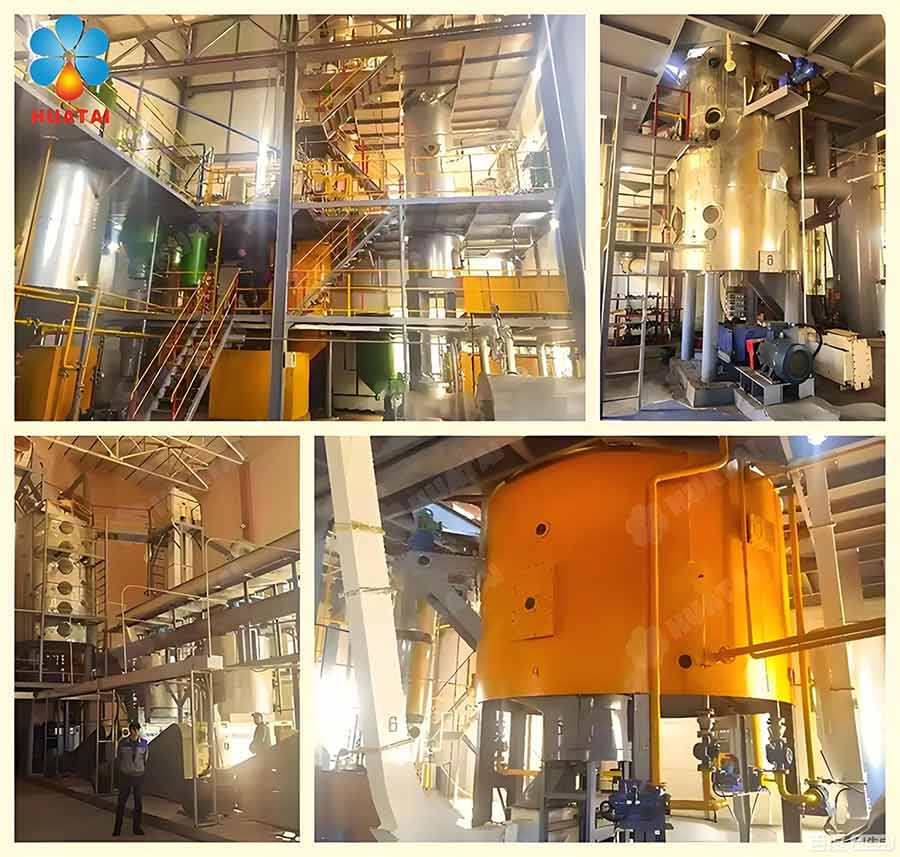
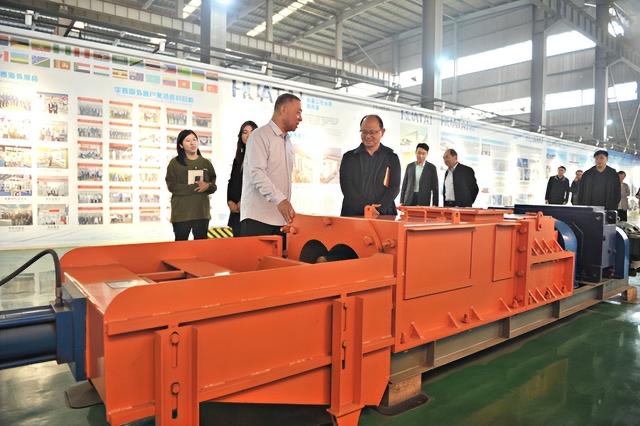
The investment required to establish a palm oil mill varies widely, ranging from small-scale workshops costing around $100,000 to large industrial complexes costing tens of millions of dollars. The specific amount depends on factors such as processing capacity, the level of automation, the inclusion of refining capabilities, and local infrastructure conditions. This article outlines a clear budgeting framework based on three dimensions-investment components, scale categories, and hidden costs-and uses Henan Huatai Cereals & Oils Machinery Co., Ltd. as an example to illustrate how professional equipment suppliers can help manage investment risks.
1. Where does the investment in a palm oil mill actually go?
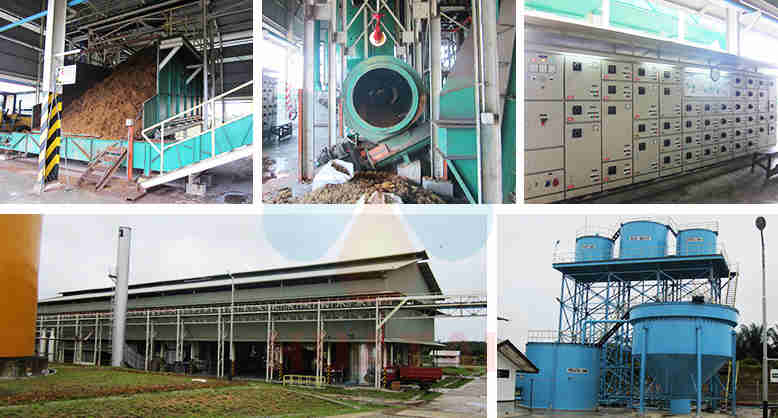
Investors new to palm oil projects often mistakenly equate the "equipment quote" with the "total investment." Industry data shows that processing equipment typically accounts for only 40% to 60% of the total investment. The complete investment breakdown includes:
| Investment Category | Allocation Range | Key Components |
| Processing Equipment | 40%–60% | Sterilization retorts, threshers, screw presses, clarification and filtration systems |
| Civil Works & Infrastructure | 20%–30% | Factory buildings, site leveling, drainage systems, internal roads |
| Utilities | 5%–15% | Steam boilers, power distribution, water treatment, compressed air systems |
| Installation, Commissioning & Working Capital | 5%–10% | Equipment installation, trial runs, spare parts, initial raw material procurement |
Equipment is merely the starting point; supporting infrastructure poses the real test for the budget. Many projects discover only after the equipment arrives that significant additional investment is required for supporting works-such as steam piping networks, power grid upgrades, and wastewater treatment-leading to severe budget overruns.
2. Investment ranges based on processing capacity
Palm oil mill capacity is typically measured in "tonnes of Fresh Fruit Bunches (FFB) processed per hour." The following is an investment overview based on industry data:
1) Small-scale palm oil mill (1–5 tonnes/hour)
Suitable for small plantations or farmer cooperatives. Equipment investment ranges from approximately $80,000 to $500,000; when civil works, boilers, and installation are included, the total investment is roughly $100,000 to $800,000. With a more streamlined configuration, a basic palm oil pressing line can be launched for as little as $15,000 to $30,000.
2) Medium-scale palm oil mill (10–30 tonnes/hour)
Suitable for commercial plantations or regional processors. The investment for a 10-ton/hour palm oil production line ranges from approximately US$1.5 million to US$2.5 million; a 20-ton/hour line costs about US$2.5 million to US$4 million; and a 30-ton/hour line costs roughly US$4 million to US$5 million. This price range typically covers the complete palm oil pressing line, boiler system, oil storage tanks, and basic electrical infrastructure.
3) Large-scale industrial palm oil mills (30–60 tons/hour)
Suitable for large plantation enterprises or industrial conglomerates. Investment for a 30-ton/hour plant ranges from US$5 million to US$7 million, while a 60-ton/hour plant can cost between US$10 million and US$15 million. Costs will increase further if refining and fractionation facilities are included.
4) Investment reference for a complete integrated complex
An academic study on a 30-ton/hour crude palm oil production project indicates that the total investment—including fixed capital, working capital, and start-up costs—is approximately US$43 million. Annual operating costs are around US$24.7 million, with an Internal Rate of Return (IRR) reaching 25.29%. This figure represents the cost level for a large, modern plant with comprehensive supporting facilities.
3. Underestimated hidden costs: Common sources of budget overruns
Beyond the quoted price of palm oil equipment, investors often underestimate the following expenses:
1) Site preparation and civil engineering. Areas with soft soil foundations or high groundwater levels require additional soil stabilization and foundation reinforcement, which can drive costs far beyond expectations. It is advisable to complete topographical surveys, geotechnical investigations, and drainage assessments before finalizing the budget.
2) Supporting utility infrastructure. "Invisible" engineering components-such as steam distribution systems, water treatment facilities, power distribution networks, cooling systems, and fire protection systems-require significant investment in design and installation. The purchase price of a boiler is merely the starting point; the associated piping networks and fuel storage systems also require capital.
3) Environmental compliance and wastewater treatment. Wastewater generated by palm oil mills (Palm Oil Mill Effluent, or POME) must be treated before discharge. Environmental standards vary by region and directly influence the scale of investment required for treatment systems; in areas with strict environmental regulations, this cost component can increase significantly.
4) Installation, commissioning, and spare parts. Costs associated with equipment installation, piping connections, commissioning and trial runs, operator training, and initial spare parts typically account for 5% to 10% of the total investment.
4. Why Choose Henan Huatai: Managing Investment Risks with Professional Expertise
Once the investment framework is established, selecting an experienced equipment supplier is a crucial step in controlling the budget and mitigating risk. Henan Huatai Cereals & Oils Machinery Co., Ltd. brings over 38 years of experience in the grain and oil machinery sector, offering tangible value in investment control for palm oil projects.
1) EPC Turnkey Services Reduce Coordination Costs. Huatai provides end-to-end services, ranging from project planning, design, and equipment manufacturing to installation, commissioning, and ongoing operation and maintenance. For palm oil projects, this eliminates the need for investors to coordinate repeatedly between equipment suppliers, civil engineering contractors, and installation teams, thereby reducing rework and delays caused by unclear interface responsibilities. Huatai has successfully delivered nearly 100 large-scale EPC (Engineering, Procurement, and Construction) projects, with a service network spanning over 70 countries.
2) Customized Solutions Prevent Over-investment. Investors vary in terms of Fresh Fruit Bunch (FFB) supply, target products (crude palm oil vs. refined oil), and local infrastructure conditions. Huatai’s portfolio covers a wide range of oil processing equipment-including palm oil production lines-allowing for the configuration of production capacity and automation levels based on actual needs, thus avoiding wasted capital.
3) Technical Expertise Ensures High Oil Extraction Efficiency. Huatai holds 56 national invention patents in the oil processing sector. Its intelligent control systems monitor parameters such as temperature and pressure in real-time, helping clients reduce production costs. In palm oil processing, every one-percentage-point reduction in the residual oil content of the press cake translates directly into increased profit.
4) After-sales Support Minimizes Downtime Losses. Huatai operates 20 overseas offices, providing 48-hour response services. For continuously operating palm oil plants, equipment-related downtime results in financial loss every day; therefore, timely spare parts supply and technical support are critical.
5. How to Plan Your Palm Oil Plant Investment?
It is recommended to proceed with the following steps:
Step 1: Confirm the supply volume of Fresh Fruit Bunches (FFB). Processing capacity must align with a stable supply of raw materials. Insufficient raw materials lead to idle capacity, while a surplus results in missed revenue opportunities.
Step 2: Define product positioning. Will the facility produce only crude palm oil, or will it include refining and fractionation? The former requires 30% to 50% less investment, whereas the latter commands higher product premiums.
Step 3: Obtain itemized quotations. Request that suppliers provide a breakdown of costs—covering the equipment list, civil engineering estimates, utility configurations, and installation/commissioning fees-rather than a single lump-sum price. This approach clarifies the sources of cost differences and facilitates the comparison of various options.
Step 4: Set aside a contingency fund. In addition to the estimated total investment, it is advisable to reserve a contingency fund of 10% to 15% to cover unforeseen expenses, such as changes in site conditions, logistics delays, or stricter environmental regulations.
Conclusion
The investment required to establish a palm oil mill plant is not a fixed figure; rather, it is a variable determined by capacity, configuration, location, and supporting infrastructure. Small-scale projects can be launched with an investment in the range of $100,000, while large-scale complexes may require tens of millions of dollars. Success hinges on gaining a comprehensive understanding of costs before making decisions, selecting partners with EPC capabilities and industry experience, and holistically planning equipment investment alongside supporting infrastructure. With its deep technical expertise in oil processing and extensive global project experience, Henan Huatai Cereals & Oils Machinery Co., Ltd. offers investors of all scales systematic support—ranging from initial solution design to ongoing operation and maintenance.
Website: https://www.oilpresscn.com/
Email: info06@cnoilmachine.com