
Ghana, known as West Africa's "Gold Coast," is rich not only in mineral resources but also in a cash crop dubbed "red gold"-the oil palm. As a major global palm oil producer, Ghana stands at a crossroads of industrial upgrading. For investors and enterprises seeking overseas expansion, now is the ideal time to enter the Ghanaian palm oil market.
This article provides a detailed guide on successfully starting a palm oil business in Ghana, covering four key dimensions: policy incentives, market gaps, processing challenges, and equipment selection (specifically regarding partnerships with Henan Huatai Cereals & Oils Machinery Co., Ltd.).
1. Why Ghana? Market Gaps and Policy Incentives
Understanding the macro-environment is crucial before investing. The palm oil business in Ghana is not merely about cultivation and extraction; it represents a massive domestic market with unmet demand and significant export potential.
1) A Massive Supply-Demand Gap
Although Ghana is a native home of the oil palm, its palm oil production falls far short of domestic demand, with 80% of market needs met through imports. For investors, this means that producing quality products locally virtually guarantees a ready market.
2) Strategic National Support
The Ghanaian government has designated the oil palm as a strategic crop for priority development. To support the industry, the government provides long-term credit facilities for plantations and processing plants, including a five-year grace period.
3) Compliance Requirements: TCDA Regulation
Effective July 14, 2025, all entities importing crude palm oil, crude palm olein, and palm olein (refined vegetable oil) must register with and obtain a license from the Tree Crops Development Authority (TCDA). This signals a move toward industry standardization; formal, large-scale palm oil processing enterprises will benefit from greater policy support.
2. Current Pain Points: Why Does Local Production Lag?
Despite immense demand, Ghana's local palm oil industry has long been constrained by traditional processing methods. These conventional techniques yield very low oil extraction rates and result in inconsistent product quality. Low production efficiency not only wastes resources but also makes it difficult for locally produced oil to compete on price with imported refined oil; furthermore, free fatty acid (FFA) levels often exceed acceptable limits. Therefore, modern processing equipment is the key to breaking this impasse.
3. Solution: Introducing Huatai Oil Machinery's Modern Palm Oil Processing Equipment
To succeed in the palm oil business in Ghana, possessing stable, efficient palm oil processing equipment that meets international standards is a core competitive advantage. As a leading Chinese manufacturer of grain and oil machinery, Henan Huatai Cereals & Oils Machinery Co., Ltd. has tailored a comprehensive solution for the Ghanaian market.
1) Huatai Oil Machinery's Proven Track Record in Ghana
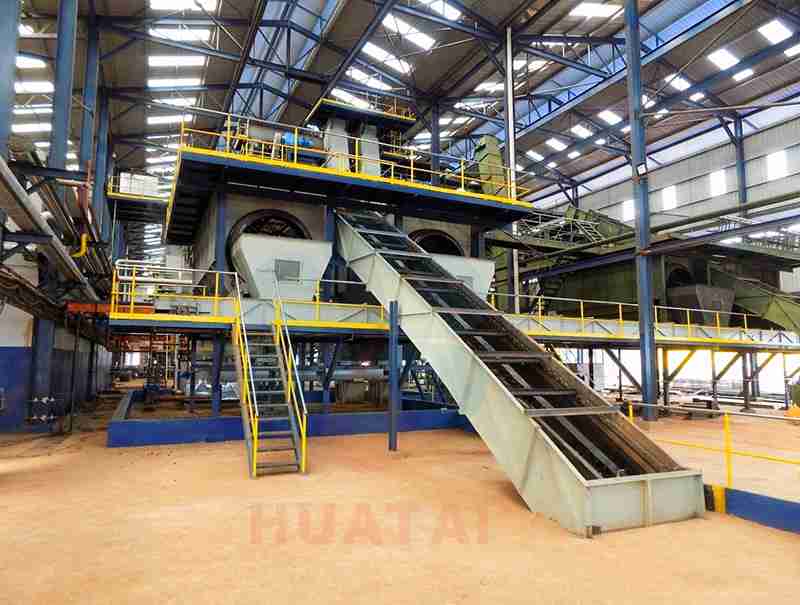
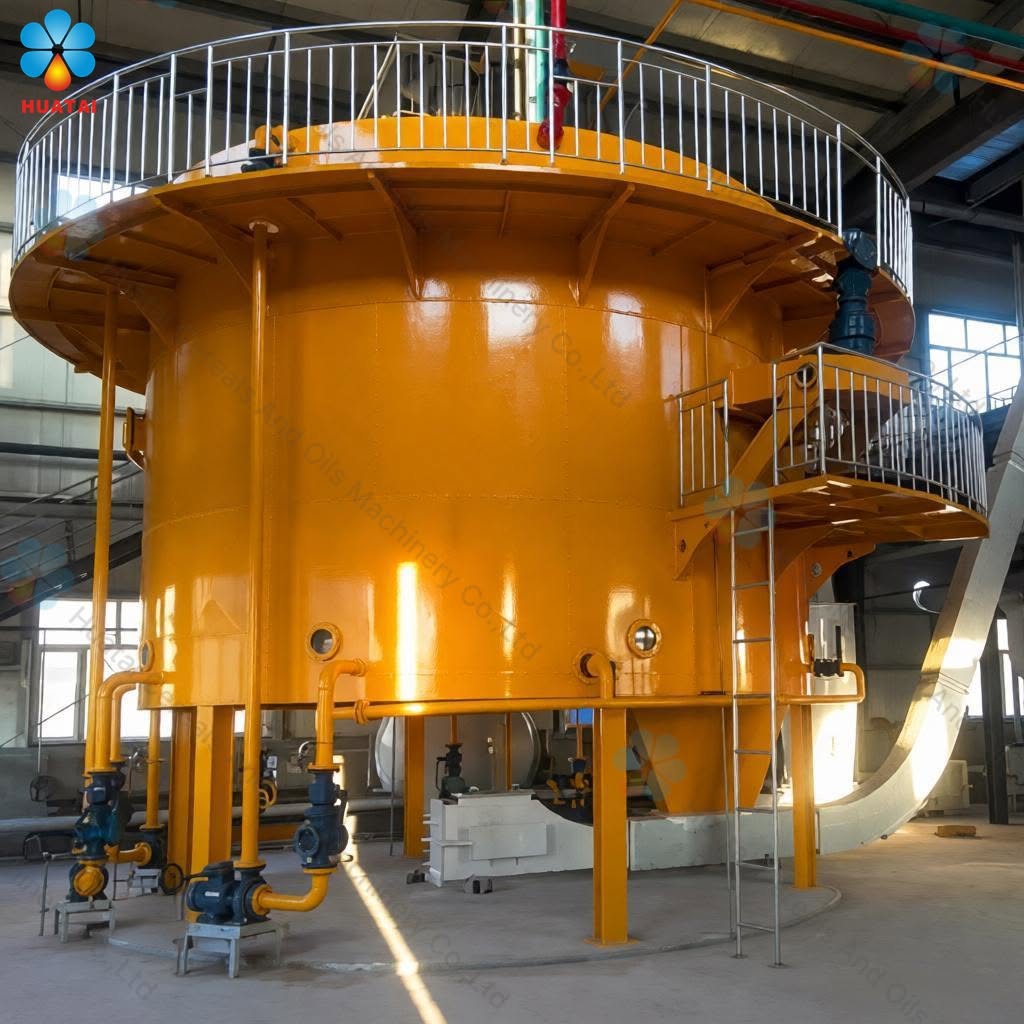
This is not Henan Huatai's first foray into the Ghanaian market. Recently, the Huatai Group shipped a range of advanced palm oil processing equipment to Ghana, including a 20 T/D palm oil extraction line, a 50 T/D palm oil refining line, and multiple 2 T/H and 1 T/H palm fruit oil processing units.
This equipment is specifically designed to handle the characteristics of local African fruit bunches, aiming to resolve issues associated with the low efficiency and poor product quality of traditional processing methods.
2) Core Process Flow
The complete palm oil equipment suite provided by Huatai covers the entire production process, from Fresh Fruit Bunches (FFB) to refined oil:
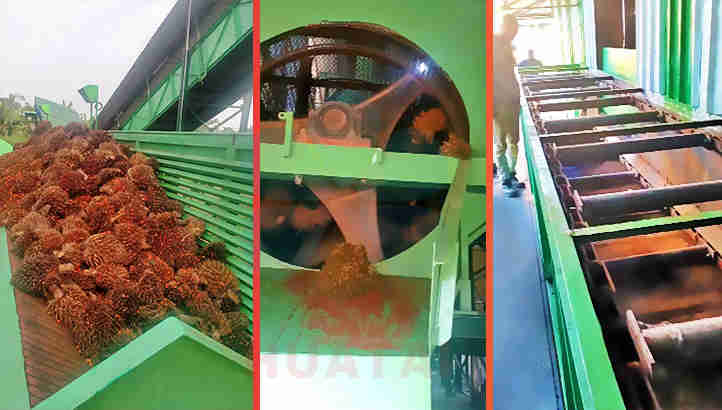
Sterilization: After harvesting, FFBs must undergo high-temperature sterilization within 24 hours to prevent a rise in free fatty acids (FFA) and ensure the quality of the crude oil.
Threshing and Digestion: A thresher separates the fruit from the bunches, followed by a digester that mashes the fruit.
Pressing: Mechanical pressing is carried out using a palm oil screw oil press.
Clarification and Drying: Impurities and moisture are separated from the pressed crude oil via a centrifuge to produce Crude Palm Oil (CPO).
Refining: To meet international food standards, the CPO undergoes palm oil refining processes, including degumming, deacidification, bleaching, and deodorization.
Palm Kernel Recovery: Huatai's equipment features a comprehensive kernel recovery system. It separates kernels from shells in the pressed cake (nuts) and presses the kernels again to maximize oil yield, significantly boosting profit margins.
3) Why Choose Huatai?
Technical Suitability: The equipment is not only highly efficient but also prioritizes eco-friendly production; it is equipped with wastewater treatment and biomass boiler systems, fully complying with Ghana's environmental regulations.
After-Sales Support: Huatai provides "turnkey" solutions covering everything from installation guidance and technical training to after-sales service. This support is crucial given the local shortage of specialized technical personnel in Ghana.
4. Investment and Operational Guidelines
If you decide to establish a factory in Ghana using Huatai Oil Machinery's equipment, here are some practical operational recommendations:
1) Site Selection Strategy:
It is advisable to locate near plantations to minimize transportation costs, or to set up operations in the Tema Industrial Park or Free Trade Zones to benefit from tax incentives.
Ghana's major ports are Tema and Takoradi; Huatai Oil Machinery's equipment can be efficiently cleared through customs at these locations.
2) Customs Clearance and Certification:
When exporting equipment to Ghana, importers must obtain a Certificate of Conformity (COC) to ensure the machinery meets the standards set by the Ghana Standards Authority (GSA).
With extensive export experience, Huatai Oil Machinery can assist by providing comprehensive technical documentation and paperwork to ensure smooth customs clearance.
3) Local Cooperation:
Contact the Tree Crop Development Authority (TCDA) of Ghana to obtain the necessary import permits.
Join the local Chamber of Commerce for Chinese Enterprises or maintain communication with the Ministry of Food and Agriculture to stay updated on policy trends.
4) Financial Support:
The introduction of modernized equipment aligns with the Ghanaian government's support criteria for initiatives like the "One District, One Factory" program and industrial modernization.
5. Conclusion
Ghana's palm oil industry is at a critical juncture, transitioning from traditional manual methods to modern, large-scale operations. Despite facing competition from imports, the significant market gap and strong government support provide a solid foundation for investors.
However, to capitalize on this "red gold" market, one must overcome the limitations of outdated processing technology. Leveraging its extensive on-the-ground experience in Ghana and across Africa (such as the 45T/H palm oil project in Cameroon), Henan Huatai Creals & Oils Machinery Co., Ltd. is well-positioned to provide you with the most efficient and reliable palm oil processing production lines. If you are considering expanding into Africa and establishing operations in Ghana, please contact us to obtain a customized investment return analysis and equipment solution for your palm oil business.
Website: https://www.oilpresscn.com/
Email: info06@cnoilmachine.com