
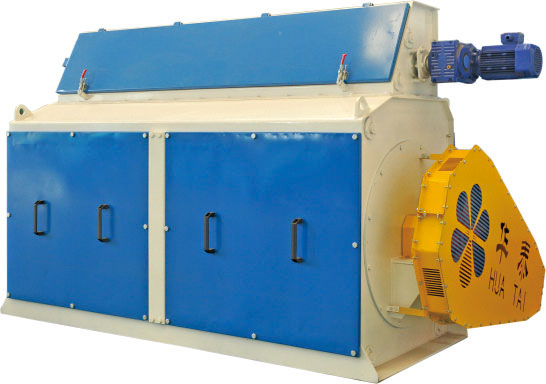

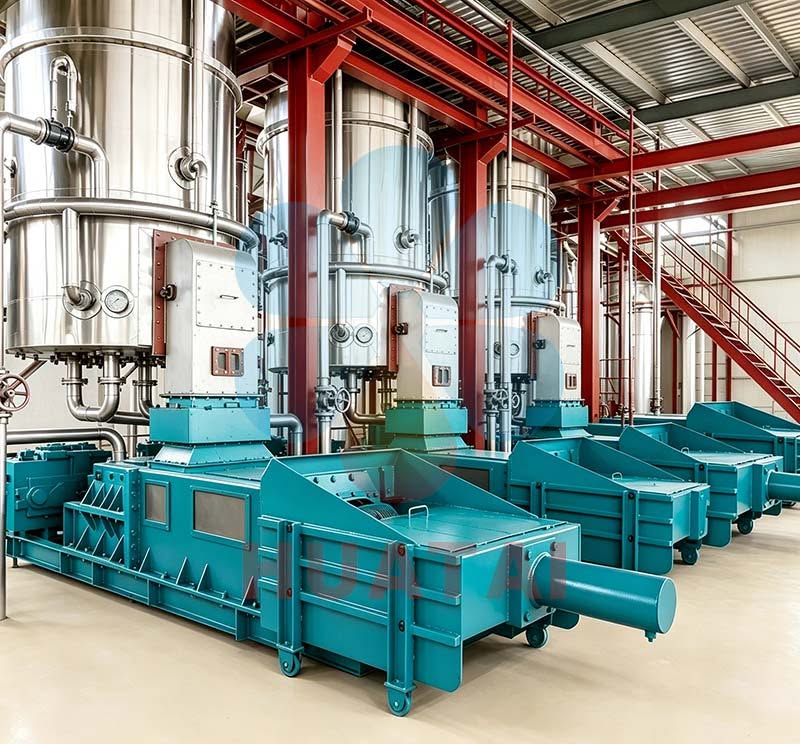
Groundnut oil is one of the most popular cooking oils, prized for its rich aroma and high nutritional value. But what exactly is the production process behind this clear, fragrant oil? This article provides a detailed breakdown of the entire groundnut oil production workflow-from raw materials to the finished product-and highlights the technical expertise of Henan Huatai Cereals & Oils Machinery Co., Ltd. in the field of groundnut oil production equipment.
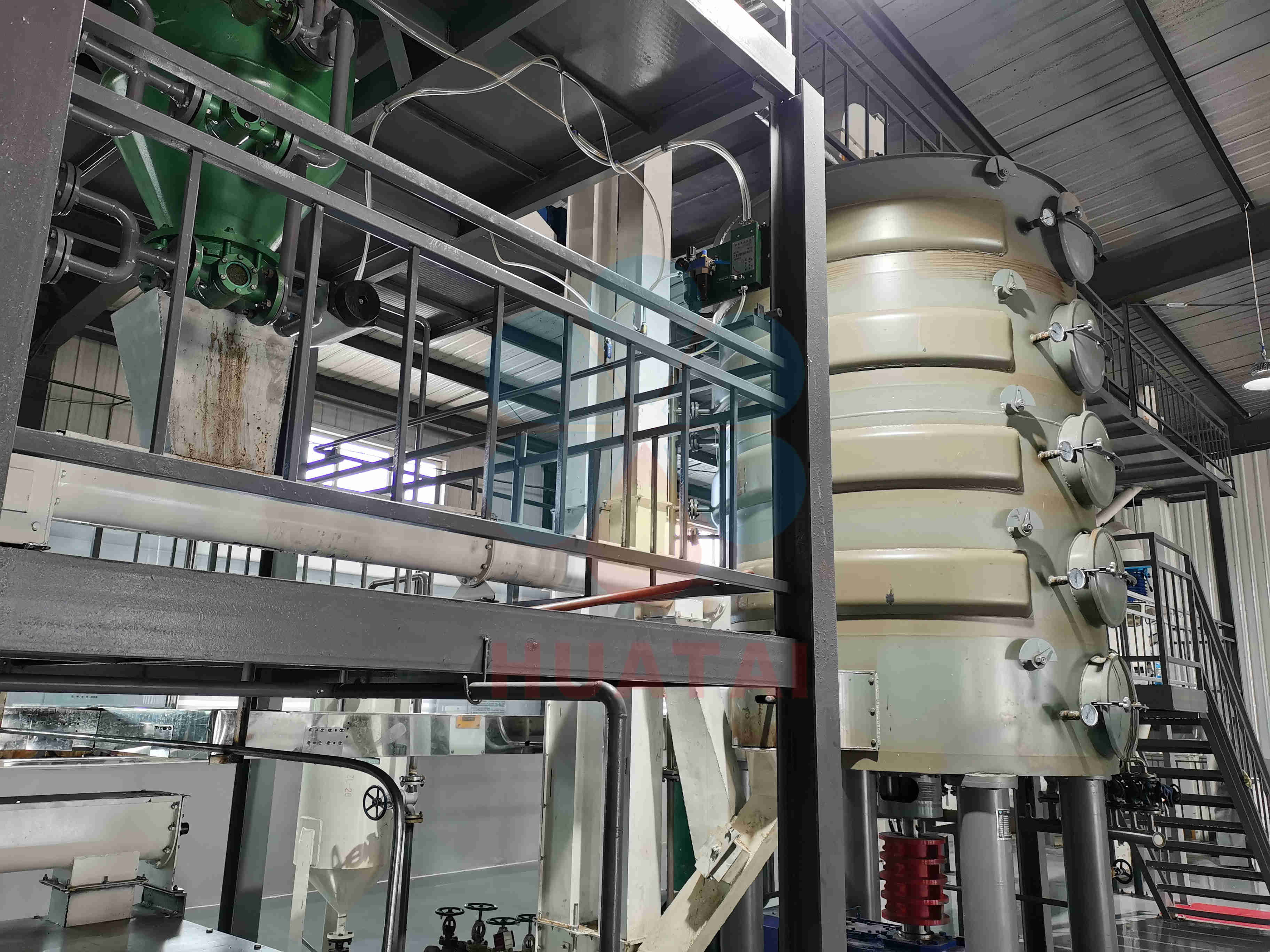
1. Raw Material Pre-treatment: Quality Oil Starts with Quality Raw Materials
The first step in groundnut oil production is raw material pre-treatment; this stage directly determines the quality of the final product.
1) Screening and Shelling. During harvest, groundnuts inevitably become mixed with impurities such as stones, sand, and plant debris, requiring initial cleaning via a vibrating screen. Next, the groundnuts undergo shelling in a shelling machine. The clean, plump groundnut kernels pass through the mesh to the next stage.
2) Crushing and Steaming/Roasting. Shelled groundnut kernels must be crushed to increase their surface area, facilitating subsequent heating and groundnut oil extraction.
3) Steaming and roasting. For the hot-pressing process, groundnuts are heated to 120–130°C with moisture content controlled at 1–2%. This breaks down the cellular structure of the oilseeds and denatures the proteins, laying the groundwork for groundnut oil pressing. Huatai's steaming and roasting equipment allows for precise control of temperature and moisture, ensuring the oilseeds reach the optimal condition for pressing.
2. Groundnut Oil Pressing Process: Choosing Between Hot Pressing and Cold Pressing
Pressing is the core stage of groundnut oil production and a critical factor in determining the oil's flavor and nutritional value. Currently, the two mainstream pressing methods are hot pressing and cold pressing.
1) Hot Pressing—the Classic Choice for Rich Aroma
Hot pressing is the traditional method for extracting groundnut oil. After undergoing high-temperature steaming and roasting (approximately 120°C), the groundnuts are fed into the oil press. High temperatures facilitate the full release of aromatic compounds in groundnuts, resulting in a high oil yield and a rich, fragrant flavor; the resulting oil is also convenient to store, making it highly popular among household consumers. The groundnut oil pressing process consists of three stages: feeding, pressing, and cake formation; the most common equipment used is the screw oil press.
2) Cold Pressing—A New Trend for Preserving Nutrients
Cold pressing involves pressing groundnuts directly without high-temperature steaming or roasting—or with only minimal heating—keeping production temperatures below 60°C. This process better preserves natural nutrients such as Vitamin E and sterols, making it ideal for producing premium, health-oriented oils. Additionally, the groundnut protein remaining after cold pressing can be comprehensively utilized, thereby increasing the raw material's economic value.
Established in 1988, Huatai Cereals & Oils Machinery Co., Ltd. boasts over 38 years of experience in the industry. The company occupies a site of more than 100,000 square meters and operates 12 intelligent workshops. It is recognized as a national-level "Little Giant" enterprise (specializing in niche markets with cutting-edge technologies) and a National High-Tech Enterprise. Its core product portfolio includes over 20 types of equipment-such as groundnut oil pressing machinery and complete groundnut oil production lines.
3. Groundnut Oil Refining: From "Crude Oil" to "Grade 1 Finished Oil"
Groundnut oil obtained through pressing is known as "crude oil" and contains impurities such as phospholipids, proteins, free fatty acids, pigments, and aflatoxins. These impurities not only affect the oil's quality and flavor but can also lead to hydrolytic rancidity. Consequently, refining is an indispensable step in groundnut oil production.
The typical refining process flow for groundnut oil is: Degumming → Deacidification → Bleaching (Decolorization) → Deodorization.
Refining procedures vary depending on the groundnut oil grade. Grade 1 and Grade 2 oils undergo six stages—degumming, deacidification, dehydration, bleaching, deodorization, and dewaxing—whereas Grade 3 and Grade 4 oils require only degumming and deacidification.
Huatai Oil Machinery also possesses strong capabilities in the field of oil refining equipment; its core business covers 28 categories of equipment, forming a comprehensive oil refining technology system. The company offers flexible configuration solutions with daily processing capacities ranging from 1 to 600 tons, meeting diverse needs ranging from laboratory R&D to industrial-scale mass production. In 2024, Huatai successfully delivered a customized 200 TPD (tons per day) groundnut oil refining plant to a client in Maoming. Integrating internationally advanced physical refining processes, the system precisely removes impurities and free fatty acids from crude oil.
4. Huatai Fully Automated Groundnut Oil Production Lines: Intelligent Oil Production
Modern groundnut oil production has entered an era of end-to-end intelligent control. Huatai’s fully automated groundnut oil production lines integrate cleaning, roasting, pressing, filtering, and bottling into a single, automated system. Equipped with intelligent detection systems, the lines monitor key parameters-such as groundnut kernel moisture content and roasting temperature-in real-time to ensure consistent product flavor.
Huatai offers turnkey, intelligent solutions for the entire process-including pretreatment, solvent extraction, and refining-with capacities ranging from 10 to 2,000 tons per day. In early 2026, a large-scale 200 TPD groundnut oil processing plant designed and manufactured by Huatai passed all factory inspections and was shipped to the client's site. Notably, the proprietary 500 TPD drag-chain extractor-featuring multiple patented technologies-provides the core capability for the client to achieve large-scale, efficient, and eco-friendly groundnut oil production.
5. Why Choose Huatai Oil Machinery?
For enterprises planning to invest in groundnut oil production, selecting a reliable equipment supplier is crucial. Henan Huatai Cereals & Oils Machinery Co., Ltd. offers advantages in several key areas:
1) Comprehensive Process Coverage: Huatai provides one-stop, turnkey solutions covering the entire workflow, from raw material pretreatment to pressing, solvent extraction, refining, and packaging.
2) Customizable Processes: The equipment supports various processing methods, including hot pressing, cold pressing, and the production of oils with distinct flavor profiles (such as rich-aroma or light-aroma) and high-end nutritional oils.
3) Global Service Network: Huatai operates across China and in over 70 countries worldwide, with 12 overseas offices. The company has established a comprehensive service system covering pre-sales, in-sales, and after-sales support.
Conclusion
From groundnut screening and shelling to steaming, roasting, pressing, refining, and deodorizing, every drop of aromatic groundnut oil embodies the ingenuity of modern grain and oil machinery technology. Leveraging 38 years of industry experience, cutting-edge technical capabilities, and a comprehensive service system, Henan Huatai Cereals & Oils Machinery Co., Ltd. consistently delivers efficient, stable, and intelligent groundnut oil production solutions to oil processing enterprises worldwide. Whether you are establishing a new plant, upgrading an existing groundnut oil production line, or optimizing your processing technology, Huatai offers tailored, high-efficiency solutions for complete groundnut oil production lines.
Website: https://www.oilpresscn.com/
Email: info06@cnoilmachine.com