
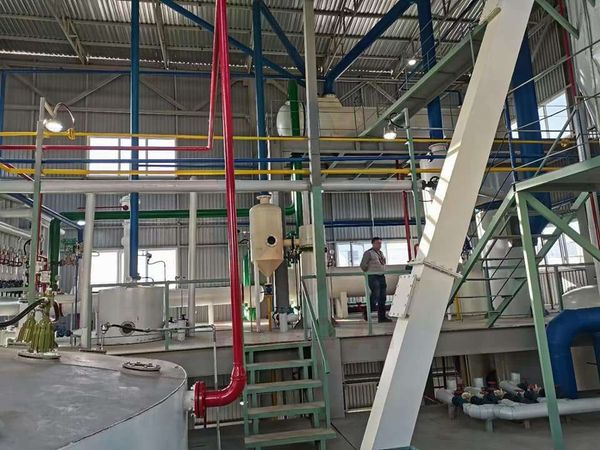
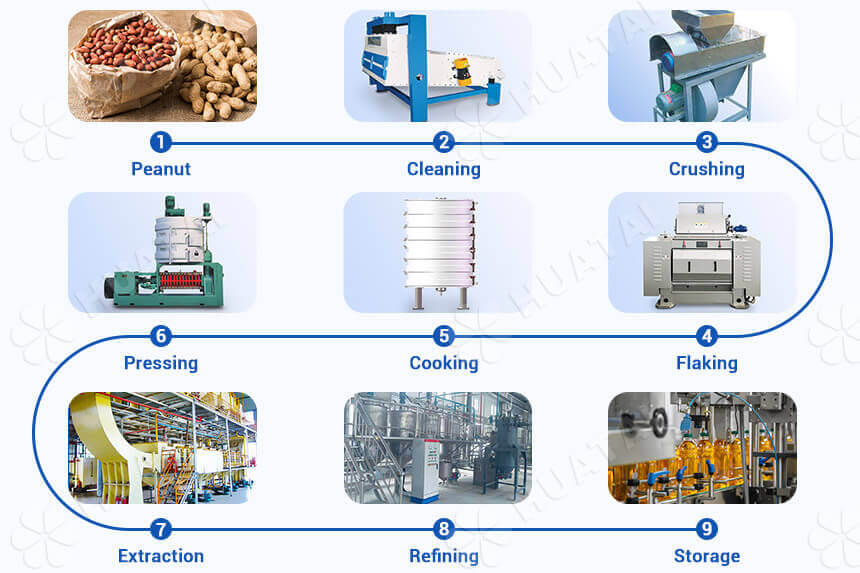
Palm oil is one of the most widely produced and consumed vegetable oils globally, appearing in everything from everyday food products to biofuels. But how exactly does a palm fruit transform into golden oil? What key technologies are involved in the palm oil extraction process, and which companies possess mature equipment manufacturing capabilities? This article addresses these questions and outlines the complete process chain—from fresh fruit to crude oil, and finally to refining and fractionation—highlighting the palm oil production equipment manufactured by Henan Huatai Cereals & Oils Machinery Co., Ltd.
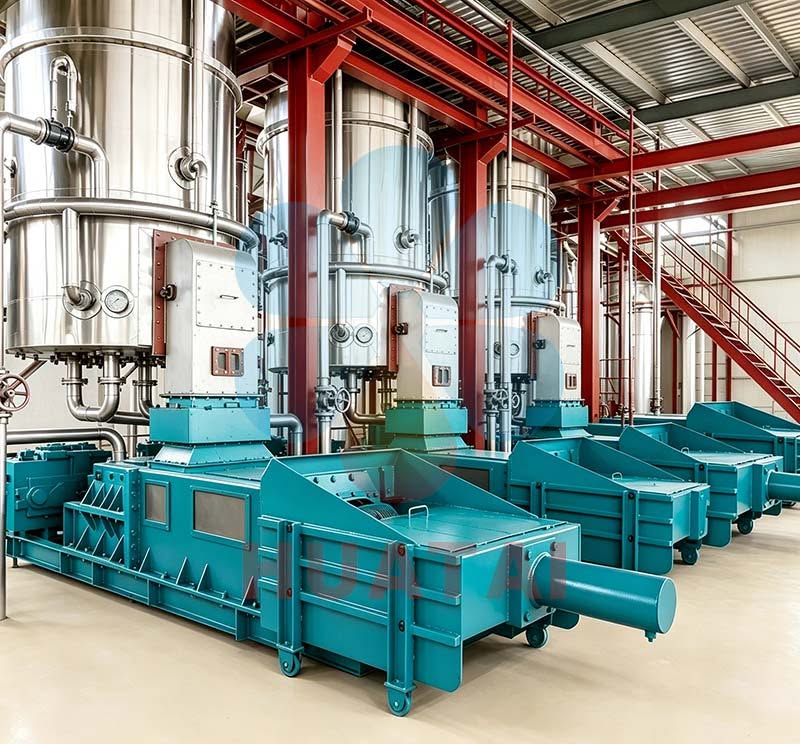
1. Where Does Palm Oil Come From?
Palm oil extraction begins with the fresh fruit bunches (FFB) of the oil palm tree. Each bunch bears over 2,000 palm fruits; the outer layer consists of pulp with an oil content of 45%–50%, while the inner layer is a hard palm nut containing the kernel. Oil extracted from the pulp is known as palm oil, whereas oil extracted from the kernel is called palm kernel oil; the two differ significantly in their properties and applications.
Palm fruit has a unique characteristic: it contains active lipases. If not processed promptly after harvesting, free fatty acid levels rise rapidly, causing the acid value of the crude oil to spike and its quality to deteriorate. Consequently, "timely sterilization" (deactivation of enzymes) is a crucial first step in palm oil extraction.
2. Core Process Flow of Palm Oil Extraction
1) Sterilization
Upon arrival at the palm oil factory, fresh fruit bunches are fed into a sterilizer for high-temperature steaming. This step serves three purposes: first, to deactivate lipases and prevent oil hydrolysis and rancidity; second, to soften the pulp, making it easier to detach the fruit from the bunch; and third, to establish suitable temperature conditions for subsequent pressing. Industrially, this process typically involves steam treatment in a pressure vessel for approximately 1 to 1.5 hours.
2) Threshing and Digestion
Sterilized bunches are fed into a thresher to separate the palm fruits from the empty fruit bunches (EFB). The empty bunches can be utilized as biomass fuel. The separated palm fruits are conveyed via a screw conveyor to a digester, where the pulp is further broken down under controlled temperature conditions to prepare for pressing.
3) Oil Pressing
This is the core stage of the entire palm oil extraction process. Palm fruits are fed into a screw press, where mechanical pressure extracts the oil from the pulp. Traditional palm fruit pressing faces several challenges: rapid wear of the screw assembly, high kernel breakage rates, and high residual oil content in the press cake. To address these issues, the industry has continuously improved equipment design and materials.
Henan Huatai Cereals & Oils Machinery Co., Ltd. possesses significant technical expertise in this field. The company's "Twin-Screw Palm Fruit Oil Press" utilizes specially selected materials and processing techniques for the screw assembly to enhance hardness and wear resistance. Its "inverted-cone" perforation design, combined with an innovative press cage structure, ensures stable operation and smooth oil discharge. The unit features a fully automated PLC control system and an IoT module, enabling real-time monitoring of production parameters and remote operation and maintenance.
4) Crude Oil Clarification and Filtration
The liquid discharged from the press is a mixture of crude oil, water, and solid debris. Through filtration and clarification tank processing, the oil phase is separated from impurities to yield Crude Palm Oil (CPO). Clarification tanks are typically equipped with steam coils to maintain the oil temperature, facilitating the clarification and separation process.
3. From Crude Oil to Finished Product: Refining and Fractionation
Crude palm oil contains impurities such as free fatty acids, pigments, and odor-causing compounds; it requires further refining to meet standards for edible oil. Palm oil refining typically involves four steps: degumming, deacidification, bleaching, and deodorization.
Palm oil processing includes a unique step: fractionation. Palm oil is rich in both saturated and unsaturated triglycerides. By controlling the temperature to induce fractional crystallization of components with different melting points, the oil can be separated into palm stearin (higher melting point; used for margarine and shortening) and palm olein (lower melting point; used for cooking oil and blended oils). Common fractionated products include palm oil grades with melting points of 24°C, 33°C, and 44°C.
In this sector, Huatai's palm oil fractionation equipment employs fractional crystallization technology to achieve efficient separation of stearin and olein, delivering product purity and yields that meet advanced industry standards. The relevant complete sets of equipment have been exported to markets such as Pakistan, helping to fill the gap in local high-end fractionation technology.
4. Equipment Manufacturing: Industrial Support for Palm Oil Extraction
The efficiency and quality of palm oil extraction depend largely on the caliber of the equipment used. A complete palm fruit oil production line requires the coordinated operation of multiple stages—such as sterilization, threshing, digestion, pressing, and clarification—placing high demands on the system integration capabilities of equipment manufacturers.
Henan Huatai Cereals & Oils Machinery Co., Ltd. (Huatai Intelligent Equipment Group) has been deeply engaged in this sector for 38+ years. Established in 1988, the company is a national-level "Little Giant" enterprise (recognized for specialization, refinement, uniqueness, and innovation), a national-level "Green Factory," and a listed company on the New Third Board. In the palm oil sector, Huatai has developed capabilities to provide complete equipment sets covering palm fruit oil pressing, palm kernel oil pressing, and palm oil refining and fractionation.
Notably, Huatai's complete palm fruit oil extraction equipment won the "Gold Award for High-Quality Palm Fruit Oil Extraction Equipment" at the 19th IGO World Grain & Oil Exhibition. The equipment designs take full account of the environmental characteristics of major production regions in Southeast Asia and Africa; for instance, a 6-ton-per-hour palm fruit oil pressing line exported to Cameroon utilizes a modular design suited to high-temperature, high-humidity environments, enabling a full production process ranging from sorting, sterilization, and pressing to crude oil filtration.
FAQs
Q: What is the difference between palm oil and palm kernel oil?
A: Palm oil is extracted from the fruit pulp (mesocarp) and has an oil content of 45%–50%, whereas palm kernel oil is extracted from the kernel. Producing 100 tons of palm oil yields approximately 10–13 tons of palm kernel oil. The two oils differ in fatty acid composition and applications.
Q: Why must palm fruit be processed quickly?
A: Lipolytic enzymes in the fruit rapidly hydrolyze the oil, leading to increased free fatty acid levels and higher acid values, which compromise crude oil quality and refining yields. One of the primary purposes of the palm oil sterilization process is to deactivate these enzymes.
Q: What is the significance of palm oil fractionation?
A: Fractionation allows palm oil to be separated into stearin and olein based on melting point, thereby meeting the diverse requirements for melting points and performance across sectors such as food processing and personal care, while enhancing product added value.
Website: https://www.oilpresscn.com/
Email: info06@cnoilmachine.com