
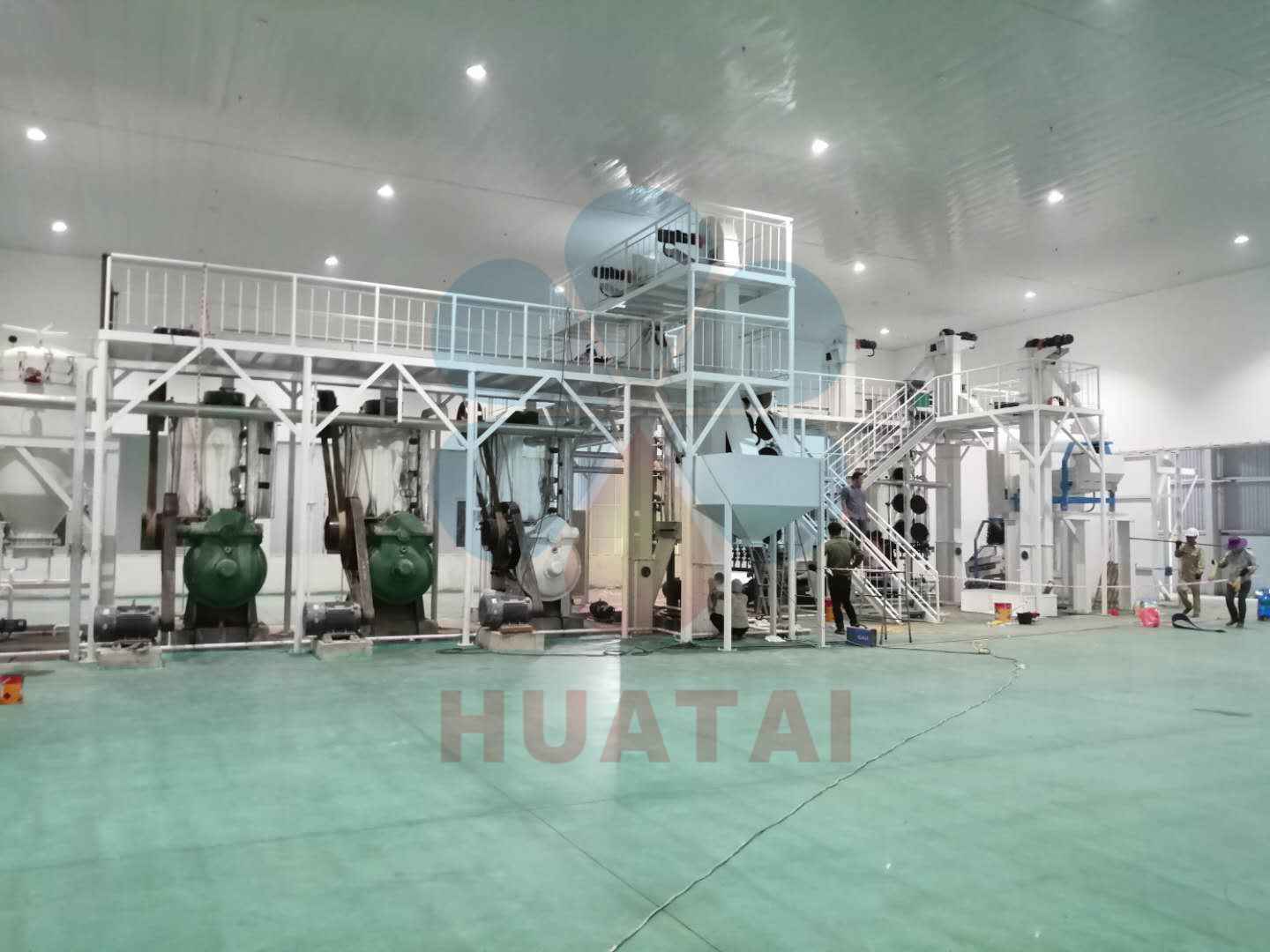
As the most widely produced vegetable oil globally, the quality of palm oil-determined by its refining process-directly dictates the market value of the final product. A complete palm oil refining production line encompasses various process stages, ranging from the pretreatment of crude oil to the final packaging of the refined product. The selection of equipment and the optimization of process parameters at each stage significantly influence oil yield, product quality, and operational costs. This article uses the palm oil refining production line from Henan Huatai Cereals & Oils Machinery Co., Ltd. as a case study to systematically outline the process composition, equipment configuration, and key selection criteria, serving as a reference for enterprises in the palm oil processing industry.
1. Fundamental Logic of Palm Oil Refining
Crude Palm Oil (CPO), obtained through the pressing of palm fruit, contains impurities such as free fatty acids, gums, pigments, odorous compounds, and trace metal ions, rendering it unsuitable for direct consumption. The primary objective of refining is to remove these impurities while maximizing the retention of beneficial components-such as Vitamin E and sterols-and minimizing refining losses.
A typical palm oil refining process consists of four core stages: degumming, deacidification (neutralization), bleaching, and deodorization. Depending on the quality of the crude oil and the specifications required for the finished product, additional stages such as dewaxing or fractionation may also be incorporated. Huatai Oil Machinery offers palm oil refining production lines in batch, semi-continuous, and fully continuous configurations, with daily processing capacities ranging from 1 ton to 1,000 tons, catering to the investment requirements of enterprises of various scales.
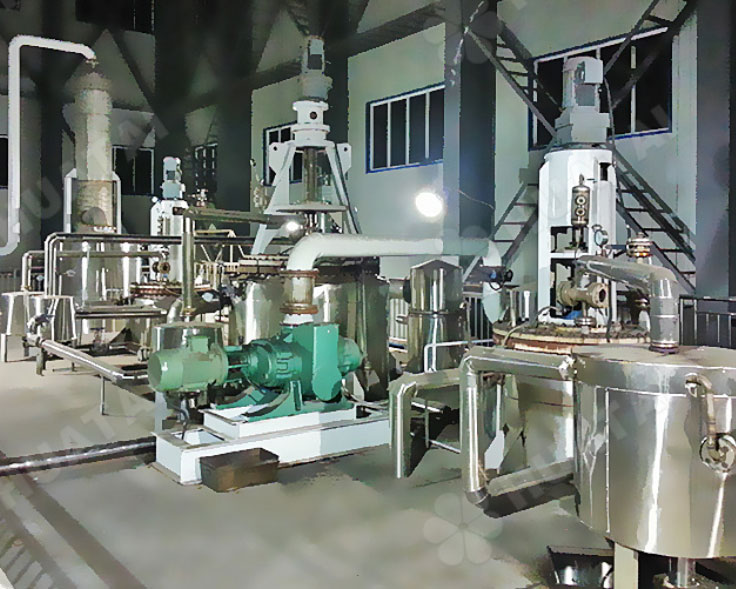
2. Process Stages and Equipment Configuration of a Complete Palm Oil Refining Production Line
1) Pretreatment and Degumming Stage
Crude palm oil typically has a high phospholipid content; therefore, degumming serves as the first critical step in the palm oil refining process. Huatai’s production lines utilize either hydration degumming processes. The configuration includes:
Crude oil metering and heating system: A plate heat exchanger raises the oil temperature to 80–90°C.
Mixing/reaction tank: Phosphoric acid or citric acid is added for acidification to break down non-hydratable phospholipids.
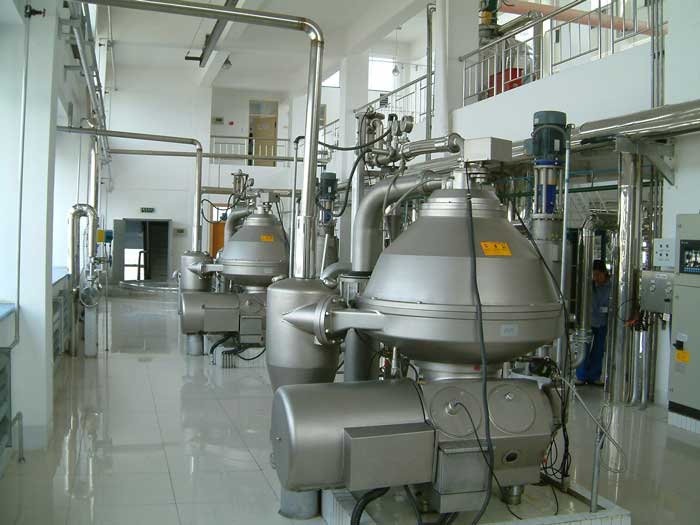
Hydration tank and centrifugal separator: Hot water is added to cause the gums to absorb water and swell; a disc-stack centrifuge is then used to separate the gums.
Drying system: The separated "oil foots" (gums) are processed for recovery, thereby reducing refining losses.
The key to equipment selection in this section lies in matching the centrifuge’s separation factor with the required processing capacity. Huatai configures self-cleaning disc-stack centrifuges of appropriate specifications based on the client’s production capacity, ensuring that the residual phosphorus content after degumming is kept within an acceptable range.
2) Deacidification Section
Deacidification is a critical stage that determines refining losses. Palm oil typically contains 3%–5% free fatty acids (FFA), though crude oil with a high acid value can exceed 10%. Huatai offers two technical approaches:
Alkali refining (chemical deacidification): Suitable for small-to-medium-scale operations. Alkali is added to neutralize free fatty acids; the resulting soap stock is removed via centrifugation, followed by water washing to eliminate any residual soap. The equipment includes an alkali preparation system, a neutralization reaction tank, a centrifugal separator, a water-washing tank, and a vacuum dryer.
3) Bleaching Section
The bleaching section removes pigments (such as carotene and chlorophyll) from the oil, as well as residual gums, soap particles, and metal ions. Huatai’s bleaching system configuration includes:
Bleaching earth metering and mixing system: Activated bleaching earth is added in metered amounts (typically 1%–3% of the oil weight) and thoroughly mixed with the oil at 105–110°C.
Bleaching tower: Designed with multi-stage retention to ensure sufficient contact time between the bleaching earth and the oil.
Leaf filter/plate-and-frame filter: Used to separate the spent bleaching earth. Huatai’s filtration units support online switching, which minimizes downtime.
Spent bleaching earth treatment system: Steam purging is employed to recover residual oil, thereby reducing losses. The core control point in the bleaching section is the balance between the amount of bleaching earth added and filtration efficiency. Huatai can adjust process parameters based on the client’s specific requirements for the color of the finished oil (e.g., a red value of ≤ 3.0).
4) Deodorization Section
Deodorization is the final heat-treatment stage in palm oil refining. It utilizes steam distillation under high-temperature and high-vacuum conditions to remove odor-causing substances and residual free fatty acids (FFAs). Key features of Huatai’s deodorization tower include:
Tower Structure: Designed as a tray or packed tower, it allows the oil to form a thin film, thereby increasing the contact area between the oil and steam.
High-Temperature Heat Exchange System: This system uses hot oil exiting the tower to preheat the incoming cold oil. Supplemented by a thermal oil heater or high-pressure steam, it raises the oil temperature to 240–260°C.
Vacuum System: A multi-stage steam-jet ejector system maintains a residual pressure of ≤ 2 mbar.
Fatty Acid Recovery System: This system captures fatty acids from the distillate, enabling the utilization of by-products.
The thermal energy recovery design in the deodorization section directly impacts operating costs. Huatai possesses extensive engineering experience in optimizing heat-exchange networks, which effectively reduces steam consumption.
5) Auxiliary Systems and Finished Product Handling
A complete palm oil refining production line also includes: a thermal oil heating system, a vacuum system, a cooling water circulation system, an automated control system, and systems for the filtration and filling of the finished oil. Huatai can provide fully automated control solutions tailored to client needs, enabling real-time monitoring and alarm-linked management of temperature, flow rates, and vacuum levels.
3. Core Advantages of Huatai's Palm Oil Refining Production Lines
Henan Huatai Cereals & Oils Machinery Co., Ltd. has long specialized in the field of oil and fat processing equipment. Its palm oil refining production lines offer the following advantages:
1) Strong Process Adaptability: Given the high FFA and high carotene content characteristic of palm oil, Huatai offers flexible configurations-choosing between alkali refining or physical refining routes. Furthermore, the dosage of bleaching earth and the temperature profile for deodorization can be adjusted based on the specific quality of the crude oil, avoiding a "one-size-fits-all" design approach.
2) Turnkey Delivery Capability: Huatai provides comprehensive turnkey project services-encompassing process design, equipment manufacturing, installation, commissioning, and personnel training-thereby reducing the costs associated with coordinating multiple suppliers.
3) Energy-Efficient Design: Heat exchange networks recover thermal energy from high-temperature oil during the deodorization stage to preheat the incoming crude oil. Vacuum systems are configured with an optimal number of steam-jet pump stages, ensuring that overall steam consumption remains within efficient, industry-standard levels.
4) Automation and Traceability: Palm oil production lines are equipped with PLC control systems, allowing for the recording and traceability of critical process parameters (such as temperature, pressure, and flow rate). This facilitates effective quality management and ensures consistency across production batches.
5) After-Sales Support: Huatai provides on-site service during the equipment warranty period, as well as ongoing spare parts supply. Clear maintenance guidelines are provided for key components, such as centrifuges and vacuum pumps.
4. Selection Recommendations: Configuring Systems Based on Scale
1) Daily Capacity of 1–10 Tons: A batch-type refining line is recommended; it offers lower investment costs and operational flexibility, making it ideal for regional palm oil processing facilities.
2) Daily Capacity of 10–100 Tons: A semi-continuous palm oil refining line balances investment with efficiency-degumming and deacidification can be performed in batches, while bleaching and deodorization operate continuously.
3) Daily Capacity of Over 100 Tons: A fully continuous palm oil refining line, integrated with an automated control system, offers lower unit processing costs and is well-suited for large-scale oil and fat processing enterprises.
The final selection should be based on a comprehensive assessment of factors including crude oil quality (FFA content, phospholipid content, and color), the required standards for the finished product, and available utility infrastructure (steam, electricity, and water supply). Huatai Oil Machinery offers crude oil sample analysis and process simulation to develop customized equipment configurations for clients.
Conclusion
Palm oil refining production lines are complex, and selecting the right equipment requires balancing oil quality, refining loss control, and operational cost-effectiveness. Leveraging extensive engineering experience in the oil and fat processing sector, Henan Huatai Cereals & Oils Machinery Co., Ltd. provides complete solutions-from process design to full-scale equipment—for palm oil processing enterprises of all sizes. For detailed information regarding capacity configurations and process solutions, please contact us.
Webite: https://www.oilpresscn.com/
Email: info06@cnoilmachine.com