
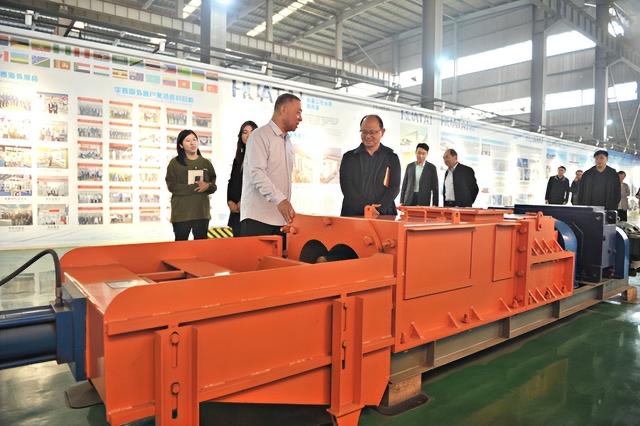
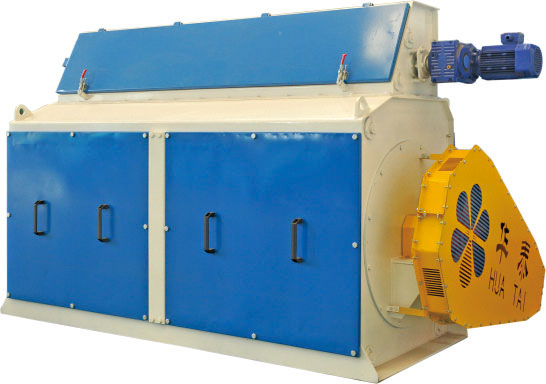

As the vegetable oil variety with the highest global production volume and trade volume, palm oil is widely utilized across sectors such as food, daily chemical products, and bioenergy. The quality of palm oil processing technology directly determines the quality of the finished oil, the oil extraction yield, and overall production efficiency. This article provides a systematic overview of the core processes, key equipment, and technical essentials involved in palm oil processing, with a particular focus on showcasing the one-stop solutions and innovative achievements offered by Henan Huatai Cereals and Oils Machinery Co., Ltd. in this field.
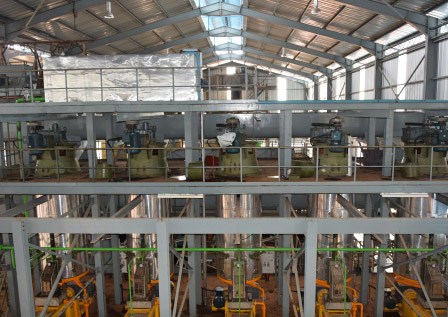
1. Basic Processes of Palm Oil Processing
Palm oil processing primarily targets two components of the oil palm fruit: the mesocarp (used to produce palm oil) and the palm kernel (used to produce palm kernel oil). Industrial-scale production is typically divided into two major stages: the palm oil extraction stage and the palm refining and fractionation stage.
1) Fresh Fruit Bunch Reception and Sterilization
Freshly harvested palm fruit bunches (FFB) must be delivered to the palm oil processing plant within 24 hours. They undergo high-temperature sterilization (steam treatment at 140–145°C for 90 minutes) to deactivate lipases—thereby preventing an increase in free fatty acids—while simultaneously softening the fruit bunches to facilitate subsequent threshing.
2) Threshing and Digesting
After sterilization, the fruit bunches enter a thresher to separate the individual fruits from the empty fruit bunches (which can be utilized as fuel or fertilizer). The separated fruits then proceed to a digesting machine, where the pulp is preliminarily separated from the kernels, and the pulp cells are ruptured to release the oil.
3) Screw Pressing
The mashed fruit pulp is fed into a twin-screw palm oil press, where high-pressure mechanical extrusion forces the crude oil to flow out from the pulp fibers. This process can achieve an oil extraction yield of over 90%; the resulting Crude Palm Oil (CPO) contains moisture, impurities, and gums.
4) Clarification and Drying
The crude oil passes through a vibrating screen to remove fibrous debris, then enters a settling clarifier tank, where density differences are utilized to separate moisture and sludge. Finally, a vacuum dryer is employed to reduce the moisture content to below 0.15%, yielding the final Crude Palm Oil, which is temporarily stored in tanks awaiting the refining process.
5) Palm Kernel Recovery
The crushed mixture is processed through hydrocyclones or pressure cookers to separate out the palm kernels. These kernels then undergo crushing, grinding, and pressing to extract palm kernel oil (PKO). The processing workflow is similar to that of palm oil extraction, though the specific equipment parameters differ.
2. Palm Oil Refining and Fractionation: The Key to Quality Enhancement
Crude palm oil contains impurities such as free fatty acids, pigments, and peroxides; it must undergo refining to meet edible-grade standards. Modern palm oil refining processes typically include:
1) Degumming: Treatment with phosphoric acid to remove phospholipids and gums.
2) Neutralization: Alkaline refining to remove free fatty acids (reducing levels to below 0.05%).
3) Bleaching: Adsorption using activated bleaching earth to remove pigments and trace metals.
4) Deodorization: High-temperature vacuum steam distillation to remove odor-causing substances and residual free fatty acids.
5) Fractionation: The use of crystallization and filtration techniques to separate palm oil into low-melting (liquid oil), medium-melting, and high-melting (stearin) fractions, thereby meeting diverse melting-point requirements (e.g., margarine production requires low-melting liquid oil).
Henan Huatai Cereals and Oils Machinery Co., Ltd. offers complete production lines for palm oil refining and fractionation. These lines feature a dual-mode design—incorporating both physical and chemical refining methods—allowing for flexible process switching based on the acid value of the raw materials, thereby significantly minimizing material losses and chemical consumption.
3. Overview of Core Palm Oil Processing Equipment
A highly efficient palm oil processing plant requires the following key equipment:
| Equipment Name: | Function: | Huatai Oil Machinery Technical Features: |
| High-Temperature Sterilizer | High-Temperature Sterilizer | Fully automatic temperature and pressure control; processing capacity up to 60 tons/hour |
| Palm Oil Screw Press | Continuous pressing and oil extraction | Wear-resistant alloy construction; residual oil content in cake ≤ 6% |
| Vertical Clarifier | Solid-liquid separation of crude oil | Scraper mechanism for slag discharge; separation efficiency increased by 15% |
| Vacuum Drying System | Reduction of moisture content in crude oil | Two-stage vacuum design; energy consumption reduced by 20% |
| Deodorization Tower | Removal of odors and FFAs | Stainless steel packed tower; high-temperature and oxidation resistance |
| Fractionation Crystallizer | Separation of components with different melting points | Precise temperature control (±0.5°C); uniform crystallization |
Henan Huatai Cereals and Oils Machinery Co.,Ltd. offers not only standalone equipment but also specializes in comprehensive turnkey palm oil mill plant solutions—covering entire line from process design, equipment manufacturing, and installation and commissioning to personnel training—thereby delivering a complete "turnkey" service.
4. Why Choose Henan Huatai Cereals and Oils Machinery Co., Ltd.?
Henan Huatai Cereals and Oils Machinery Co., Ltd. was established in 1988. The company possesses several core advantages in the field of palm oil processing:
1) Extensive Experience in Overseas Projects
Huatai Oil Machinery has successfully constructed numerous palm oil production lines for major palm oil-producing nations, including Ghana, the Democratic Republic of the Congo, Cameroon, Peru, and Nigeria.
2) Energy-Efficient and Eco-Friendly Design
By utilizing a steam waste heat recovery system, energy consumption in the sterilization and drying stages is reduced by 30%.
Biomass waste-such as empty fruit bunches and palm shells—is utilized as boiler fuel, enabling a self-sustaining energy cycle within the plant facility.
Wastewater is treated to meet regulatory standards for irrigation use, while solid waste is processed into organic fertilizer.
3) Intelligent Control Systems
All equipment is outfitted with fully automated PLC control systems that provide real-time monitoring of pressure, temperature, and oil flow rates.
4) One-Stop After-Sales Service
Huatai Machinery offers a 12-month warranty and lifetime maintenance services, in addition to maintaining a year-round stock of spare and wear parts. Overseas clients may request on-site technical guidance from our engineers, with a response time as fast as 48 hours.
Conclusion: Choose Huatai—Partnering for a Golden Era of Palm Oil
Palm oil processing is a sophisticated discipline that integrates mechanical engineering, thermal engineering, and chemical engineering. From fresh fruit bunches to high value-added fractionated products, every stage of the process warrants meticulous optimization. Drawing upon 38+ years of professional expertise, Henan Huatai Cereals and Oils Machinery Co., Ltd. offers comprehensive solutions ranging from small-scale pilot lines (10 tons/day) to large-scale industrial facilities (1,000 tons/day).
If you are currently planning a palm oil processing project-or seeking to upgrade the energy efficiency and quality of your existing palm oil production lines—we invite you to contact us to receive a complimentary process proposal and return-on-investment analysis. We look forward to partnering with clients worldwide to help unlock the maximum value in every drop of palm oil!
Website: https://www.oilpresscn.com/
Email: info06@cnoilmachine.com