
In recent years, global demand for palm oil has continued to rise, attracting the attention of an increasing number of investors interested in the palm oil processing sector. For those looking to venture into this field, the most pressing question is undoubtedly: How much capital is required to start a palm oil business? Drawing upon the practical experience of Henan Huatai Cereals and Oils Machinery Co., Ltd. (hereinafter referred to as "Huatai Oil Machinery"), this article will provide a detailed breakdown of the investment components involved in establishing a palm oil processing plant, along with reasonable budget estimates.
1. Key Investment Components for a Palm Oil Processing Plant
Establishing a palm oil processing plant involves investment costs primarily comprising the following categories: land and facility construction costs, palm oil processing equipment procurement costs, raw material procurement costs, labor and electricity operating costs, and environmental protection facility investments. Among these, costs related to land, labor, and electricity are heavily influenced by regional variations and are considered relatively uncontrollable factors; conversely, investment costs associated with production scale and equipment configuration can be controlled and adjusted based on actual operational requirements.
1) Land and Infrastructure Investment: A palm oil processing plant requires a specific site area to accommodate equipment installation, raw material storage, and finished product warehousing. Small-to-medium-scale palm oil production lines typically require a plant area ranging from approximately 1,000 to 5,000 square meters; land costs and infrastructure construction expenses vary significantly depending on the region.
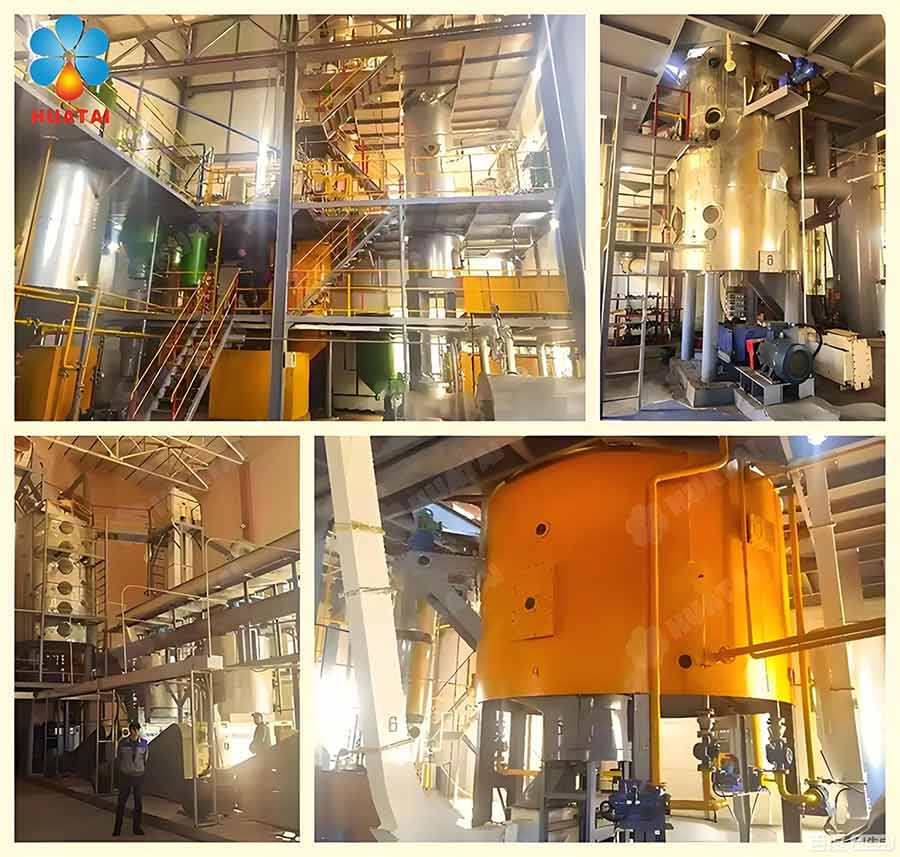
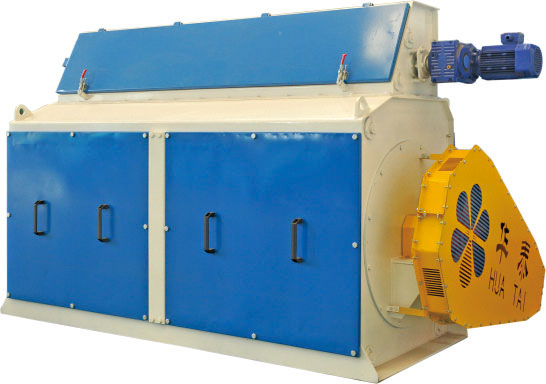
2) Equipment Investment (Core Expenditure): Equipment procurement constitutes the single largest investment expenditure for a palm oil processing plant. A complete palm oil processing line typically includes: a raw material receiving and conveying system, sterilization tanks, fruit threshing machines, digesting tanks, twin-screw palm oil presses, filtration systems, refining equipment, and associated storage facilities. The scale of the equipment investment directly determines the production line's level of automation, processing capacity, and the quality of the final product.
3) Raw Materials and Operating Costs: Palm fruit (specifically, fresh fruit bunches) serves as the primary raw material for palm oil processing; its price is subject to fluctuations influenced by the region of origin, seasonality, and market supply-and-demand dynamics.
2. Investment Budgets for Palm Oil Processing Plants of Varying Scales
Based on production capacity, the investment budgets for palm oil processing plants can be categorized into the following three tiers:
1) Small-Scale Palm Oil Processing Plants (500 kg/h – 5 tons/h)
For investors just starting out in the industry, a small-scale palm oil processing plant represents an ideal entry-level option. Huatai Oil Machinery suggests that if the palm fruit processing capacity is around 500 kg/h, one can configure basic equipment such as a palm fruit thresher, a 500 kg/h twin-screw palm oil press, and a frame filter press; the investment cost typically falls within the range of several hundred thousand RMB.
If the processing capacity is increased to 1–5 tons/hour, the standard configuration includes equipment such as sterilization tanks, fruit threshing machines, digesting tanks, palm oil presses, clarification machine, and plate-and-frame filter presses; the investment cost generally ranges from several hundred thousand to over a million RMB.
2) Medium-scale Palm Oil Processing Plants (6–10 tons/hour)
For investors with substantial capital resources who wish to operate on a larger scale, a medium-scale production line represents a highly cost-effective choice. Taking a production line with a processing capacity of 10 tons/hour as an example, this has become the most strategically significant investment option for medium-sized plantations. A professional 10-ton/hour palm oil processing plant can deliver industrial-grade efficiency within a sustainable budget, without requiring the massive capital outlay associated with large-scale processing plants. The construction cycle for a production line of this scale typically ranges from 6 to 10 months, depending on the specific site preparation status.
3) Large-scale Palm Oil Processing Plants (10 tons/hour and above)
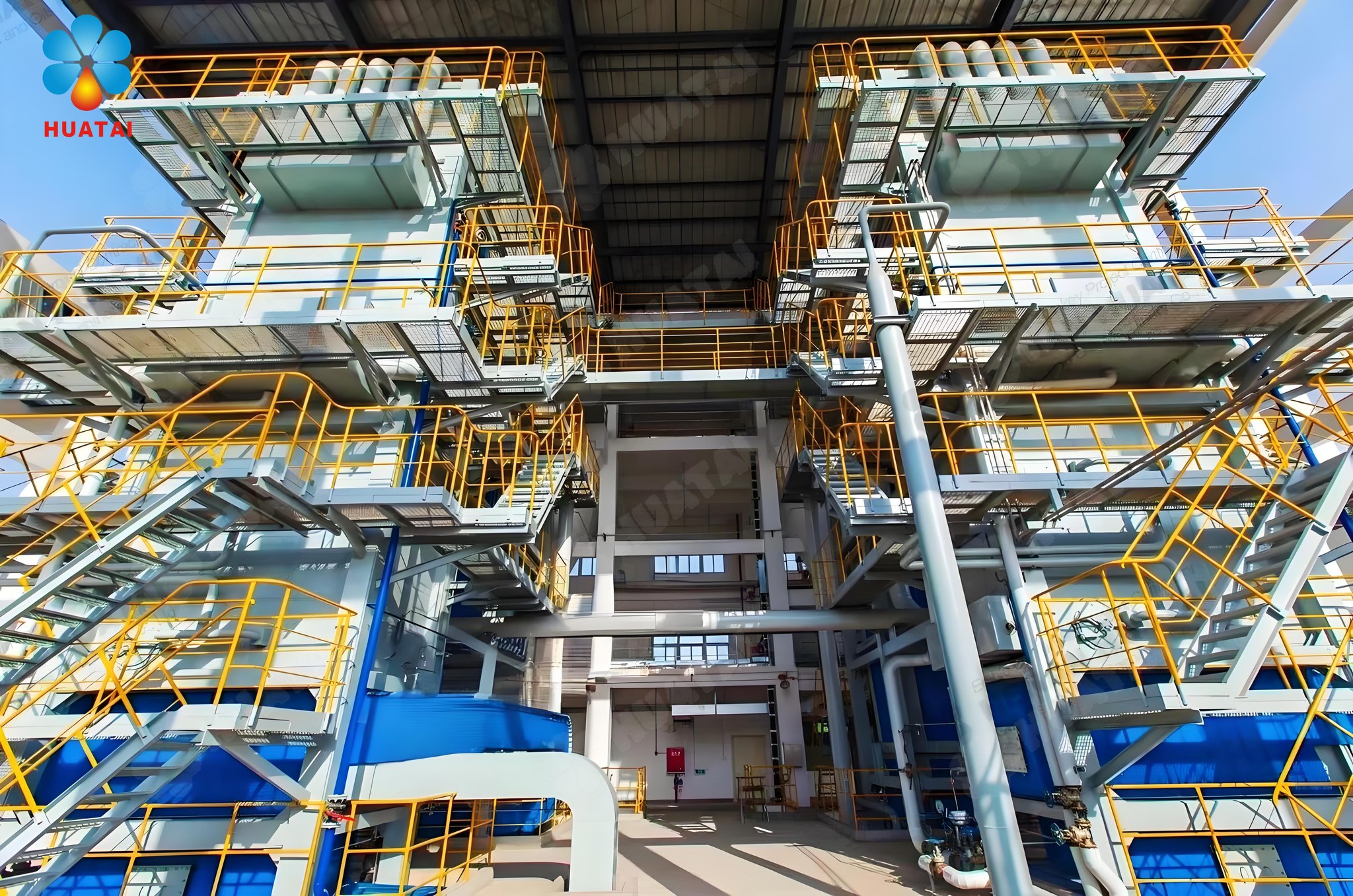
Large-scale palm oil processing plants are suitable for large-scale, industrialized operations and involve a substantial investment. Taking Huatai Oil Machinery’s complete 45-ton/hour palm fruit oil pressing system as an example, the entire system encompasses every stage of production—including raw material reception, sterilization, fruit threshing, pressing, crude oil processing and storage, palm kernel recovery, and biomass boiler power generation systems. This project stands as one of the largest crude palm oil processing facilities in Cameroon.
3. Why Choose Henan Huatai Cereals and Oils Machinery Co., Ltd.?
In the field of palm oil processing equipment, Henan Huatai Cereals and Oils Machinery Co., Ltd. is a leading domestic manufacturer of grain and oil machinery, as well as a trusted partner for your palm oil business ventures.
1) Strong Corporate Strength and Credentials
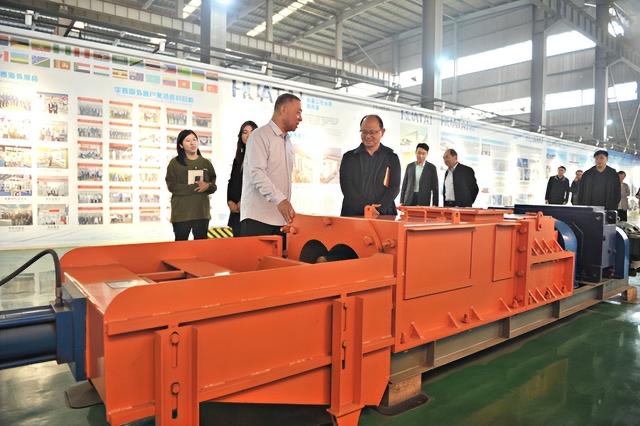
Through 38+ years of development, Huatai Oil Machinery has evolved into a large-scale manufacturer of grain and oil machinery that integrates R&D, design, manufacturing, and installation services.
2) Extensive Technical Expertise and Innovative Capabilities
Huatai Oil Machinery remains steadfast in its commitment to technological innovation, holding numerous patents in the field. Notably, our palm fruit oil press features a proprietary dual-screw pressing technology and a fully automated PLC control system. This not only elevates oil extraction rates to an industry-leading standard but also enables real-time monitoring of production parameters and remote operation and maintenance, while significantly reducing energy consumption per unit compared to traditional equipment.
3) Global Experience in Palm Oil Projects
Huatai Oil Machinery's products have been exported to 70 countries and regions worldwide, allowing us to accumulate extensive international project experience within the palm oil processing sector. We have successfully implemented representative projects in locations such as Cameroon, the Democratic Republic of the Congo, Ghana, Venezuela, and Peru.
4) Comprehensive, One-Stop Turnkey Services
Huatai Oil Machinery offers a complete, one-stop service package covering the entire project lifecycle—from initial planning, market analysis, and investment feasibility assessments to plant layout design, process engineering, equipment manufacturing, installation, and commissioning, extending through to operational training and technical consulting. Whether you are just beginning to explore a potential palm oil venture or are preparing to expand and upgrade an existing production line, Huatai Oil Machinery's expert team is ready to tailor the optimal solution to meet your specific needs.
4. Investment Return Analysis for Palm Oil Operations
Palm oil processing represents a business venture with substantial potential for investment returns. In terms of market demand, palm oil currently ranks as the world's leading vegetable oil in terms of production volume, consumption volume, and international trade volume, accounting for approximately 30% of total global edible oil consumption. Widely utilized across the food processing, catering, and oleochemical industries, palm oil enjoys a broad and robust market presence.
Regarding profitability, the net profit margin for palm oil is approximately 5% higher than that of comparable oils, such as soybean oil and peanut oil. Furthermore, palm fruit offers distinct advantages in terms of yield: the output per hectare is five times greater than that of peanuts grown in the same region, and nine times greater than that of soybeans. This ensures a stable and abundant supply of raw materials, thereby presenting immense potential for investment returns.
5. Summary and Recommendations
In summary, the capital investment required to launch a palm oil business varies significantly depending on the scale of operations:
Small-scale/Entry-level (500 kg/h – 5 tons/h): Several hundred thousand to several million RMB
Medium-scale/Industrial (6–10 tons/h): Several million to tens of millions of RMB
Large-scale/Commercial (Over 10 tons/h): Tens of millions to hundreds of millions of RMB
If you are considering venturing into the palm oil business, welcome to contact us to receive a detailed investment analysis and equipment proposal tailored to your specific requirements. By choosing Huatai Oil Machinery, you gain a trusted, long-term partner dedicated to helping you navigate the currents of the palm oil industry and sail toward success.
Website: https://www.oilpresscn.com/
Email: info06@cnoilmachine.com