
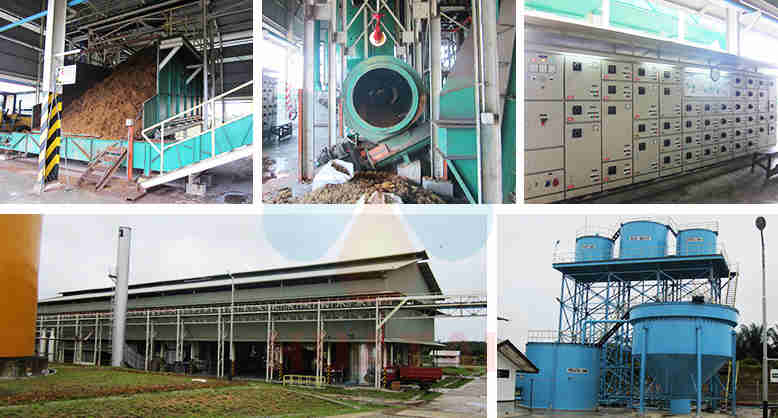
Palm oil is the world's most widely produced and traded vegetable oil, finding extensive application across various sectors such as food processing, cosmetics, and biofuels. In recent years, driven by the continuous growth in global demand for palm oil, an increasing number of investors have turned their attention to the palm oil industry. However, launching a palm oil business is not as simple as merely purchasing a few pieces of equipment to get started; rather, it requires a comprehensive and systematic asset deployment strategy. Drawing upon the asset structure of the palm oil value chain-and leveraging the extensive experience of Henan Huatai Cereals and Oils Machinery Co., Ltd. in the field of palm oil processing equipment-this article provides a comprehensive overview of the various assets required to establish a palm oil business, along with practical recommendations.
1. A Comprehensive Overview of Asset Composition Across the Palm Oil Value Chain
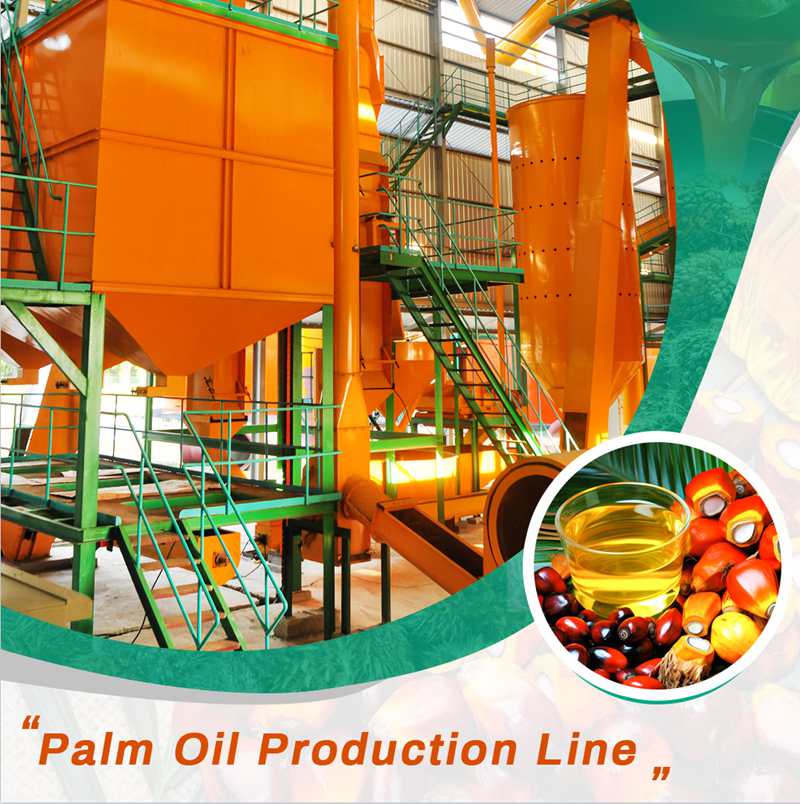
The palm oil business is typically divided into three key stages: palm fruit bunch harvesting, crude palm oil extraction, and refining and deep processing. Asset allocation varies significantly across these different stages, allowing investors to select their entry point based on their specific financial capabilities and market positioning. Typically, the journey from fresh palm fruit bunches to the final liquid palm oil product involves passing sequentially through three core processing stages: the pressing stage (extracting crude oil), the refining stage (removing impurities, decolorizing, and deodorizing), and the fractionation stage (separating products with different melting points). Following this industry-specific logic, we will now provide a detailed breakdown of every essential asset component, offering professional, practical advice regarding equipment selection and facility construction plans.
2. A Checklist of Core Hardware Assets for a Palm Oil Business
Launching a palm oil business requires investment in several major categories of core hardware assets: production and processing equipment, storage facilities, environmental treatment systems, plant infrastructure, and auxiliary support facilities.
1) Core Equipment for the Palm Fruit Pressing Stage (From Fruit Bunches to Crude Oil)
There is a strict time governing the process from palm fruit reception to pressing; ideally, fruit bunches should be delivered to the crude oil extraction plant within 24 hours of harvesting to prevent a rise in free fatty acid (FFA) levels, which can compromise oil quality. The equipment configuration for the pressing section typically includes:
Sterilizers: Subject palm fruit bunches to high-temperature steam sterilization; available in two forms: vertical and horizontal.
Threshers: Separate the individual fruits from the fruit bunches; options include simple-type or rotary drum threshers.
Digesters: Further mash the separated fruits to prepare them for the pressing stage.
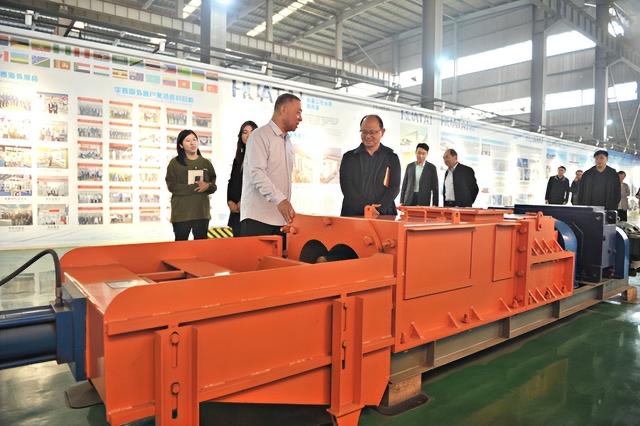
Oil Presses: The core pressing equipment. Huatai Oil Machinery's independently developed, specialized double-screw palm oil press features a dual-screw structure, ensuring higher pressing efficiency and more stable oil yields.
Filtration Equipment: Performs preliminary filtration on the freshly extracted crude oil to remove oil residue and impurities.
Huatai Oil Machinery offers customized equipment configurations tailored to each client's budget and processing capacity-whether for small-scale operations or large-scale industrial production-providing the most suitable equipment combination for every need.
2) Core Equipment for the Palm Oil Refining Section (From Crude Oil to Refined Oil)
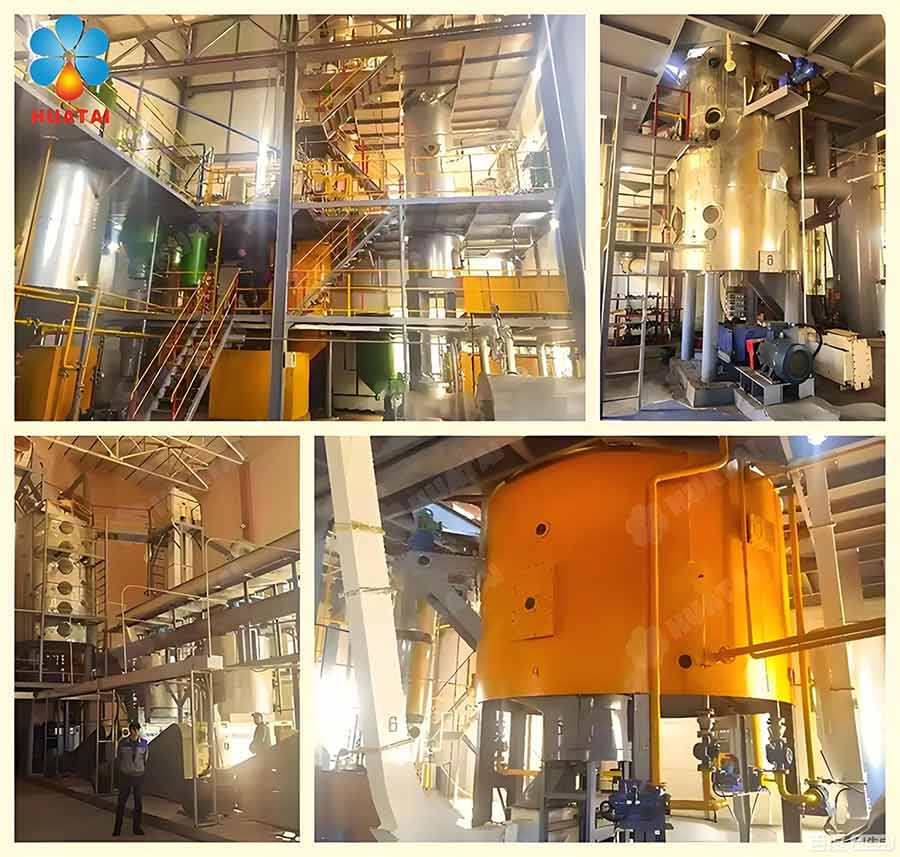
Refining is the process of subjecting crude palm oil to sophisticated processing to primarily remove impurities, gums, pigments, and off-flavors, thereby ensuring the palm oil meets edible consumption standards. The refining process mainly comprises the following stages:
Degumming System: Removes gums and phospholipids from the crude oil.
Decolorization System: Utilizes activated bleaching earth to adsorb and remove pigment impurities.
Physical Deacidification & Deodorization System: Removes free fatty acids and odor-causing substances under high-temperature, high-vacuum conditions.
Cooling & Filtration System: Cools the refined oil to the appropriate temperature, ensuring the quality of the finished product.
Huatai Oil Machinery's fully automated palm oil refining equipment employs a continuous refining process suitable for processing capacities ranging from 1 to 1,000 tons per day. Characterized by low energy consumption and high oil yields, these systems have been successfully implemented in numerous countries and regions worldwide.
3) Core Equipment for the Palm Oil Fractionation Section (Enhancing Product Added Value)
Fractionation involves controlling the cooling and crystallization process of palm oil to separate it into distinct fractions with different melting points-such as 18°C liquid palm oil (olein) and 33°C solid palm oil (stearin). This process significantly extends the shelf life of the palm oil products and enhances their clarity and market adaptability. Fractionation equipment primarily includes:
Crystallization Equipment: Subjecting palm oil to precise temperature control and gradual cooling to form crystals with varying melting points;
Filtration and Separation Equipment: Effectively separating the liquid oil components from the solid fat components;
Automated Control Systems: Real-time monitoring and regulation of critical process parameters, such as crystallization temperatures and cooling curves.
Huatai Oil Machinery's palm oil fractionation technology utilizes advanced crystallization equipment, filtration systems, and precision automated temperature control software. This allows for the highly efficient separation of palm oil into its liquid and solid fractions-specifically palm oil and palm stearin—tailored to meet each client's specific requirements regarding product melting points.
3. Additional Ancillary Assets for Palm Oil Operations
Beyond the core processing machinery, conducting palm oil operations necessitates a comprehensive suite of ancillary facilities to ensure the integrity and continuity of production:
1) Storage Tank Systems: Comprising palm oil storage tanks, constant-pressure tanks, and supporting components such as receiving pumps, and transfer pumps;
2) Pipeline Systems: Encompassing oil pipelines, utility lines, and cleaning lines to ensure the safe conveyance of materials and the effective cleaning of equipment;
3) Automation and Control Systems: Facilitating the centralized control and status monitoring of all plant equipment, thereby enhancing operational efficiency and safety;
4) Environmental Treatment Systems: As palm oil processing generates a certain volume of wastewater and solid waste, Huatai Oil Machinery provides eco-friendly solutions—specifically wastewater treatment equipment designed for the grain and oil industry-to ensure that enterprises operate in full compliance with environmental regulations;
5) Intermediate Storage Tanks and Finished Product Warehouses: Designated for the temporary storage of intermediate products and finished oils;
4. Why Choose Huatai Oil Machinery as Your Palm Oil Business Partner?
Once the specific asset requirements for a palm oil business have been clearly defined, the critical challenge facing investors becomes how to systematically integrate and implement these assets on the ground. Selecting a mature, professional, and reliable equipment supplier-one capable of serving as a comprehensive EPC (Engineering, Procurement, and Construction) contractor-is often far more critical than merely purchasing individual pieces of equipment. Henan Huatai Cereals and Oils Machinery Co., Ltd. stands as a leader in this field:
Extensive Practical Experience in Palm Oil Processing Projects
In recent years, Huatai Oil Machinery has accumulated a wealth of practical experience in the field of palm oil processing equipment, undertaking and successfully completing numerous benchmark projects:
Cameroon Palm Fruit Pressing Project: A 6 TPH (tons per hour) palm fruit pressing production line featuring Huatai’s patented "specialized twin-screw palm fruit oil press";
Pakistan Palm Oil Refining Project: A complete set of 100 TPD (tons per day) equipment for palm oil refining and fractionation-fully designed, manufactured, and installed by Huatai-which precisely addressed and improved the operational status of the local palm oil industry;
Peru Palm Oil Refining Project: A 50 TPD palm oil refining project that was delivered flawlessly and earned high praise from the client for its advantages.
These success stories-spanning major global palm oil production regions and consumer markets such as Africa and South America-fully demonstrate Huatai Oil Machinery's comprehensive capabilities in the realm of palm oil processing equipment.
Conclusion
Establishing a palm oil business is a systemic undertaking that requires the coordinated planning and allocation of various assets-including processing equipment, storage facilities, environmental protection systems, and plant infrastructure. From pressing and refining to fractionation, the selection of equipment at every stage directly impacts oil yield, product quality, and the return on investment cycle.
Henan Huatai Cereals and Oils Machinery Co., Ltd. has dedicated over 38+ years to deep cultivation within the field of grain and oil machinery. We hold numerous national patents and boast a proven track record of successful palm oil projects, with our products exported to more than 70 countries and regions worldwide. If you would like to learn more about asset allocation solutions for palm oil operations, or to obtain a customized quotation for palm oil processing equipment, welcome to visit us. We are committed to providing comprehensive support for your palm oil business—from initial planning through to full-scale implementation.
Website: https://www.oilpresscn.com/
Email: info06@cnoilmachine.com