

Palm oil is the most widely produced and traded vegetable oil globally, finding extensive application in food processing, the manufacture of daily chemical products, and bioenergy. But how exactly is palm oil produced step-by-step in a factory? This article provides a detailed breakdown of the entire production process-from fresh fruit bunches to refined finished oil-and offers an overview of modern palm oil factory operations, highlighting the advanced technology and equipment from Henan Huatai Cereals & Oils Machinery Co., Ltd.
1. Two Major Stages of Palm Oil Production
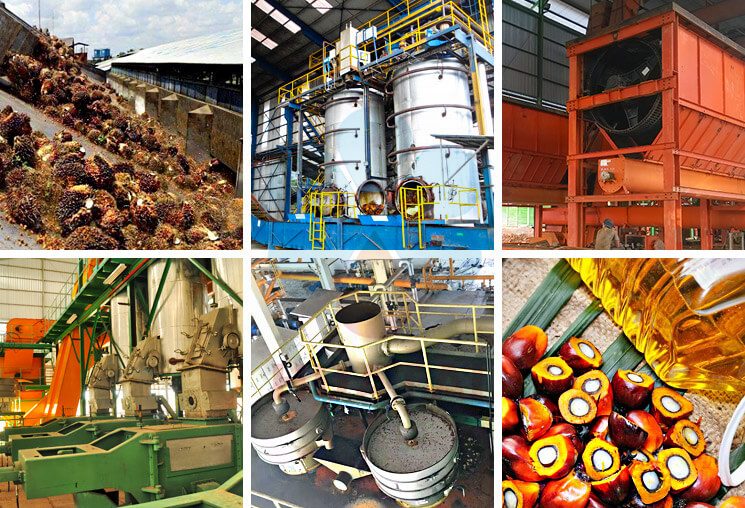
Palm oil production generally consists of two main stages: crude palm oil extraction (the pressing section) and palm oil refining (the refining and fractionation section). Crude palm oil extraction involves the initial recovery of oil from oil palm fruits to produce Crude Palm Oil (CPO) and Crude Palm Kernel Oil (CPKO). The refining section involves further processing to remove impurities, pigments, and odors, as well as using palm oil fractionation technology to separate palm oil into products with different melting points to meet diverse market demands.
2. Crude Palm Oil Extraction Section—From Fresh Fruit Bunches to Crude Palm Oil
Crude palm oil extraction is the foundational step in palm oil production. With over 38 years of experience in the R&D and manufacturing of grain and oil machinery, Huatai Oil Machinery can construct palm oil mill plants with capacities ranging from 10 to 1,000 tons per day, providing turnkey solutions that cover everything from plant layout design and machinery manufacturing to on-site installation and commissioning. The complete crude palm oil extraction process primarily involves the following steps:
1) Raw Material Reception
After being harvested from plantations, Fresh Fruit Bunches (FFB) must be delivered to the palm oil extraction plant for processing within 24 hours. This timeframe is crucial to prevent a rise in free fatty acids (FFA) and to ensure the high quality of the crude oil. The raw material reception platform features a staged unloading design and is responsible for unloading, cleaning, and temporarily storing the palm fruit.
2) Sterilization
Sterilization is a critical first step in palm oil production. Fresh palm fruit bunches are loaded into sterilization tanks and treated with high-pressure steam. The primary objective of this step is to deactivate enzymes and prevent oil rancidity, thereby ensuring the high quality of the crude oil. Huatai Oil Machinery offers various configuration options-such as vertical or horizontal sterilization tanks—tailored to the specific scale of the palm oil processing plant.
3) Threshing
Sterilized fruit bunches enter the thresher, where intense vibration separates the palm fruit from the bunches. The separated empty fruit bunches (EFB) can serve as biomass fuel for boilers to generate electricity, enabling resource recycling.
4) Digesting and Pressing
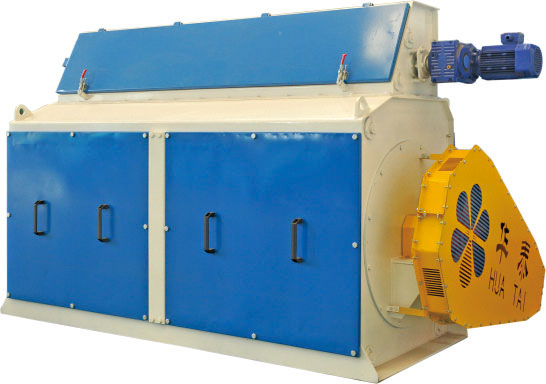
After threshing, the palm fruitlets proceed to the pressing station for digesting and oil extraction. High-temperature processing disrupts the palm fruit pulp cells, facilitating easier oil extraction. Huatai’s specialized twin-screw palm fruit oil press plays a pivotal role in this stage. Equipped with proprietary twin-screw pressing technology and a fully automated PLC control system, the equipment not only boosts oil yield to industry-leading levels but also utilizes IoT modules for real-time production parameter monitoring and remote maintenance, significantly reducing energy consumption compared to traditional equipment. Huatai's complete palm oil processing line integrates multiple patented technologies across the pressing, refining, and fractionation stages; it delivers excellent oil yields in actual operation and achieves industry-leading efficiency regarding water, electricity, and steam consumption.
5) Crude Oil Clarification
The extracted liquid (a mixture of oil and water) passes through a vibrating screen to remove solid impurities, is heated to 85–90°C, and is then fed into a clarification tank for oil-water separation. The separated crude palm oil is transferred to storage tanks.
6) Palm Kernel Recovery
The press cake (a mixture of fiber and palm kernels) is conveyed to a fiber separation system to separate the fiber from the kernels. The recovered palm kernels undergo further processing-including crushing, flaking, cooking, and pressing-to extract palm kernel oil. Palm kernel oil is widely used in the food and personal care industries.
3. Palm Oil Refining Section-From Crude Oil to Refined Finished Oil
Crude palm oil contains impurities such as phospholipids, free fatty acids, pigments, and odor-causing substances, requiring deep purification through the palm oil refining process. Huatai Oil Machinery provides comprehensive palm oil refining solutions, covering the four core stages: degumming, deacidification, bleaching, and deodorization.
The choice of palm oil refining process depends on the palm oil mill plant's production scale:
Batch refining: Suitable for small-scale palm oil production lines (1–20 tons/day)
Semi-continuous refining: Suitable for medium-scale palm oil production lines (20–50 tons/day)
Fully continuous refining: Suitable for large-scale palm oil processing plants (50–600 tons/day)
The four core refining steps:
1) Degumming
Removes water-soluble impurities such as phospholipids and gums from crude oil. Methods typically include hydration degumming or acid degumming; hot water or phosphoric acid is added to precipitate impurities, which are then separated using a disc centrifuge.
2) Deacidification
Removes free fatty acids from crude oil to lower the acid value. Methods include physical refining (steam distillation) or chemical refining (alkali refining).
3) Bleaching
Uses adsorbents like activated bleaching earth to remove pigments, residual soap, and metal ions, thereby improving the oil's color.
4) Deodorization
Involves injecting steam under high-temperature and high-vacuum conditions to remove odor-causing substances and residual free fatty acids, significantly enhancing the quality of the palm oil.
Refined palm oil meets national quality standards regarding moisture, impurities, acid value, and peroxide value; it features a clear, bright color and a mild taste, and produces minimal smoke during cooking.
4. Palm Oil Fractionation Section-Meeting Diverse Market Demands
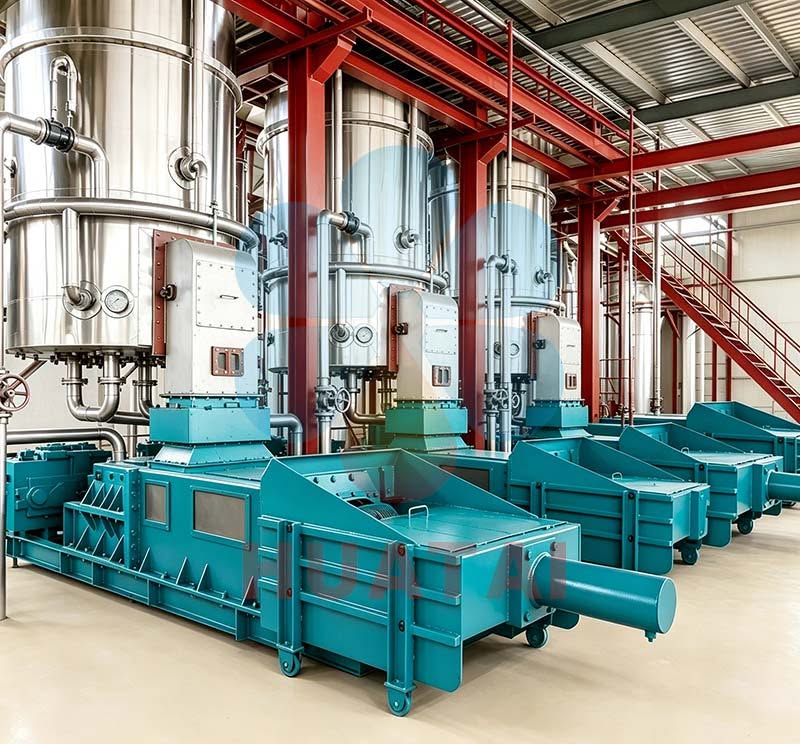
A unique advantage of palm oil is its ability to be naturally separated into products with different melting points through physical means. The palm oil fractionation process uses controlled cooling and crystallization to separate palm oil into a liquid fraction (palm olein) and a solid fraction (palm stearin).
Huatai Oil Machinery possesses core technical advantages in this field. Its palm oil fractionation equipment enables efficient separation of palm stearin and olein, achieving world-class levels of product purity and yield, thereby fully meeting raw material requirements across diverse sectors such as food processing and the chemical industry.
5. Henan Huatai Cereals & Oils Machinery Co., Ltd.-A "Chinese Force" in the Global Palm Oil Industry
Henan Huatai Cereals & Oils Machinery Co., Ltd. is a National High-Tech Enterprise and a National-level Green Factory. The company operates a modern production base spanning over 100,000 square meters, with products serving more than 70 countries and regions worldwide.
In the international market, Huatai's palm oil processing technology and equipment have been successfully deployed across more than 70 countries and regions, including Southeast Asia and Africa. Recent representative projects include:
A 45 T/H complete palm fruit oil extraction plant in Cameroon: Covering the entire production process-including raw material reception, sterilization, threshing, pressing, crude oil treatment and storage, palm kernel recovery, and a biomass boiler power generation system-this is the largest crude palm oil processing project in Cameroon.
A 100 TPD palm oil fractionation plant in Pakistan: This project filled a gap in local high-end fractionation technology, driving the industry's transition from "extensive processing" to "high-value-added manufacturing."
6. Conclusion
From the timely handling of fresh fruit bunches to sterilization, threshing, and pressing, through to refining, deodorization, and fractionation, production in a modern palm oil mill plant is a highly mechanized and automated system. Selecting an palm oil equipment supplier capable of providing full-industry-chain services is key to the success of a palm oil processing project. With over 38 years of deep industry experience, a comprehensive "R&D–Manufacturing–Service" value chain, and a global project portfolio, Henan Huatai Cereals & Oils Machinery Co., Ltd. has established itself as a trusted partner in the palm oil processing sector.
Whether for small-scale palm oil refineries processing a few tons per day or large-scale palm oil processing plants with capacities of hundreds of tons daily, Huatai offers tailored turnkey solutions, contributing Chinese expertise and strength to the high-quality development of the global palm oil industry.
Website: https://www.oilpresscn.com/
Email: info06@cnoilmachine.com