
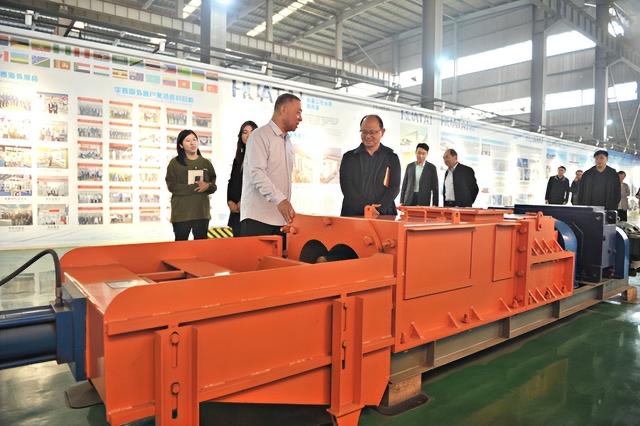

The oil palm is the world's most economically valuable oil-bearing plant, widely cultivated across tropical Africa, Latin America, and Southeast Asia. Palm oil, extracted from the fruit, has surpassed soybean oil in annual production volume to become the world's leading vegetable oil. As global demand for palm oil continues to rise, processing methods are undergoing a profound transformation-shifting from traditional manual labor toward automation, intelligent systems, and eco-friendly practices. As a leading enterprise in China's grain and oil machinery industry, Henan Huatai Cereals& Oils Machinery Co., Ltd. leverages over 38 years of industry expertise and numerous core patented technologies to provide global clients with one-stop palm oil processing solutions, covering everything from pressing and refining to fractionation.
1. Overview of Oil Palm Processing: The Critical Transition from Field to Factory
The core of oil palm processing lies in the efficient extraction of oil from the fruit pulp while preserving the palm kernels for subsequent palm kernel oil extraction. Traditional processing methods relied on manual labor, resulting in low efficiency and high losses. In contrast, modern processing methods utilize complete sets of mechanized and automated equipment to achieve end-to-end process control—from fresh fruit bunches (FFB) to refined oil. Huatai Oil Machinery can construct palm oil processing plants with capacities ranging from 10 to 1000 tons per day, meeting the full spectrum of needs from small-scale workshops to large-scale industrial facilities.
2. The Pressing Process: The First Core Stage of Modern Processing
Modern palm oil pressing involves six key steps, each demonstrating the power of technological innovation:
Step 1: Raw Material Reception—Palm fruit bunches are unloaded, cleaned, and temporarily stored using a fully hydraulic unloading platform; this platform employs sectional hydraulic control to ensure smooth and efficient unloading.
Step 2: Sterilization—Fruit bunches undergo sterilization using high-temperature steam. This critical step effectively deactivates enzymes, prevents oil rancidity, and ensures the high quality of the crude oil. Huatai Oil Machinery holds multiple patents in the field of sterilization tanks. The company manufactures vertical sterilization tanks with capacities ranging from 10 to 35 cubic meters, as well as various horizontal models. Its automatically controlled vertical sterilization tanks feature a unique design and fully automated processing, effectively saving on labor and steam.
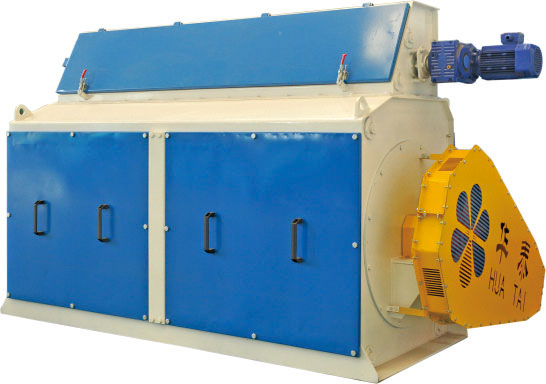
Step 3: Threshing—After sterilization, the fruit bunches are conveyed via a bucket elevator to the thresher, where strong vibrations ensure the perfect separation of palm fruit from the empty fruit bunches. Huatai’s proprietary shaftless thresher (5–30 TPH capacity) offers lower costs and higher stripping efficiency compared to conventional models.
Step 4: Palm Oil Pressing—The fruitlets undergo high-temperature cooking to break down their cellular structure before being pressed by a palm fruit oil press to extract oil-rich crude oil. Huatai’s independently developed "Twin-Screw Palm Fruit Oil Press" is the core equipment in this stage. Equipped with a fully automatic PLC control system, it not only boosts oil yield to industry-leading levels but also utilizes IoT modules for real-time production parameter monitoring and remote maintenance, significantly reducing energy consumption per unit compared to traditional equipment. This patented product handles capacities of 2–20 TPH and achieves a residual oil content in the press cake as low as 6%. It features PLC control, a hydraulic system for cake discharge, and high-strength screw and cage components for a long service life.
Step 5: Crude Palm Oil Clarification—The pressed liquid enters the clarification section for sedimentation and separation; the purified crude oil is then conveyed to storage tanks.
Step 6: Palm Kernel Recovery—The press cake (a mixture of fiber and palm kernels) enters the fiber separation system; the separated palm kernels are sent to a dedicated silo for subsequent palm kernel oil extraction.
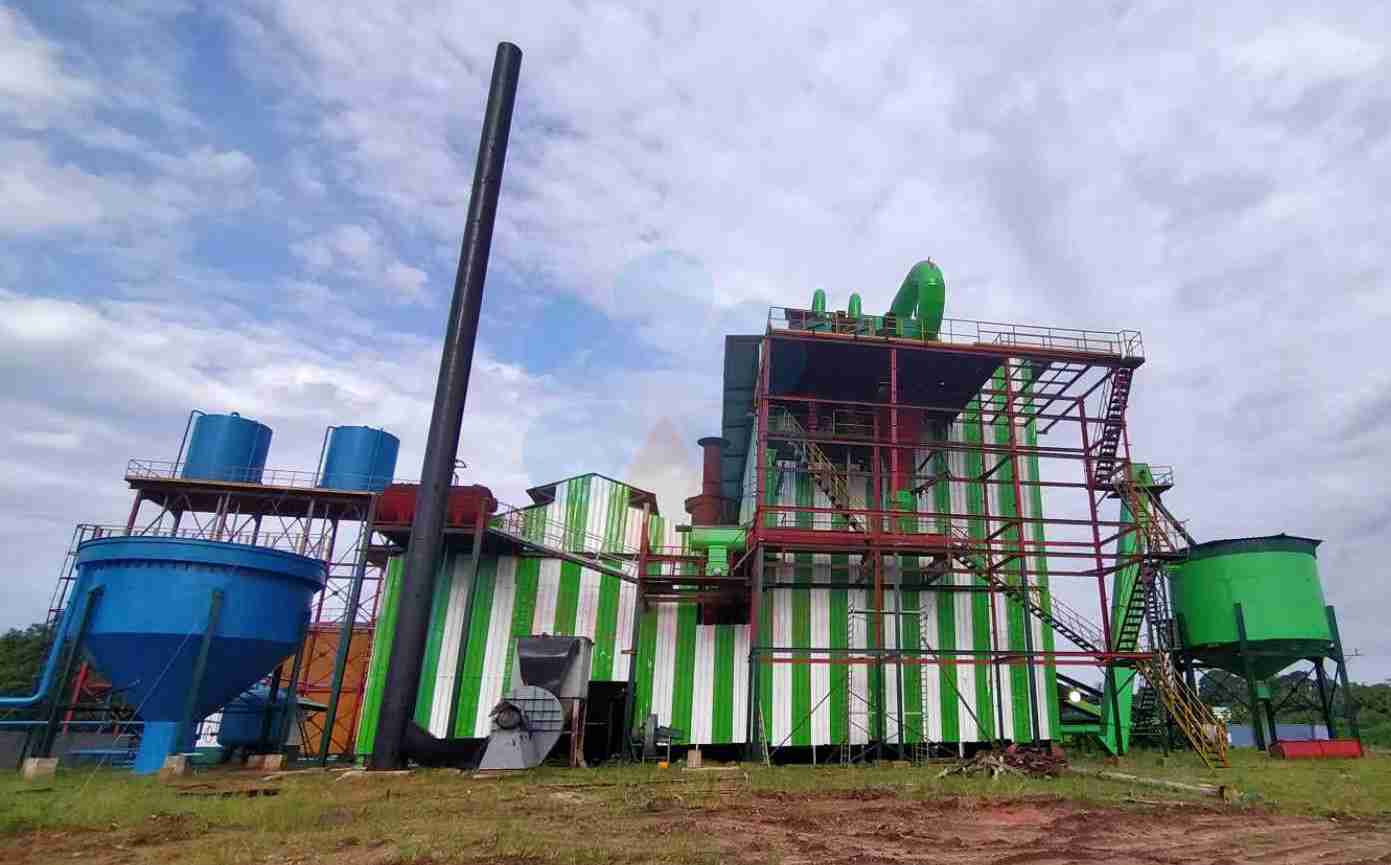
Huatai Oil Machinery's complete palm fruit oil processing equipment has been successfully exported to numerous African countries, including Cameroon, the Democratic Republic of the Congo, and Ghana. Taking the 6 TPH project in Cameroon as an example, the palm oil production line utilizes Huatai’s patented twin-screw palm fruit oil press to execute the entire process—from sorting, cooking, and pressing to crude oil filtration. Its unique modular design is specifically adapted to Africa's hot and humid climate, ensuring excellent adaptability and operational stability.
3. Palm Oil Refining Process: From Crude Oil to High-Quality Edible Oil
Freshly pressed crude oil contains impurities and requires further refining to meet international standards for edible oil. Huatai Oil Machinery offers three refining solutions tailored to different production scales: batch refining for small-scale lines (1–20 TPD), semi-continuous refining for medium-to-large lines (20–50 TPD), and fully continuous refining for large-scale plants (50–600 TPD).
The refining process comprises four core steps:
Degumming/Deacidification: Uses a washing method to effectively separate soap stock from the oil mixture, preparing it for subsequent stages.
Bleaching: Removes pigments, residual soap, and metal ions from the palm oil, enhancing its color.
Deodorization: A critical quality-enhancement step that removes undesirable odors, resulting in edible oil with a pure flavor profile.
Huatai Oil Machinery possesses extensive international experience in palm oil refining. In 2022, Huatai successfully delivered a 50 TPD palm oil refining and fractionation project for a Peruvian oil company; the plant passed its initial trial run on the first attempt, delivering high-quality oil with low consumption rates. In 2025, a complete 100 TPD palm oil refining and fractionation plant was successfully delivered to and commissioned in the Democratic Republic of the Congo; that same year, a 100 TPD unit was shipped to Pakistan, filling a local gap in high-end fractionation technology.
4. Palm Oil Fractionation Process: Key to Maximizing Value
Palm oil possesses unique multi-melting-point characteristics; fractionation allows refined oil to be separated into products with distinct melting points (such as palm stearin and palm olein), significantly increasing economic value. Huatai’s palm oil fractionation production lines offer processing capacities ranging from 1 to 500 TPD.
Huatai's palm oil fractionation equipment utilizes fractional crystallization technology to precisely separate stearin and olein, controlling the melting point variance of the products to within ±0.5°C. Advanced crystallization and filtration equipment, combined with precise automatic temperature control software, ensure stable and reliable fractionation results. In June 2025, Huatai Intelligent Equipment Group successfully completed production and shipped a 100 TPD (tonnes per day) palm oil fractionation project tailored for a Pakistani client. Leveraging in-depth research into the melting point differences of palm oil triglycerides, the project enables the efficient separation of palm stearin and olein, achieving world-class standards in product purity and yield.
5. Core Technical Advantages of Huatai Oil Machinery
Recognized as a national-level "Little Giant" enterprise (specializing in niche markets with cutting-edge technologies) and a national-level "Green Factory," Huatai Oil Machinery possesses significant technical advantages in the palm oil processing sector:
1) Patented Technology: Huatai holds nine national patents for palm oil processing equipment, covering core machinery such as vertical sterilizers, shaftless drum-type fruit threshers, complete palm oil production lines, specialized palm fruit screw presses, and palm kernel crushers.
2) Intelligent Control Systems: Huatai's proprietary twin-screw palm fruit press features a fully automated PLC control system, utilizing IoT modules to enable real-time production parameter monitoring and remote operation and maintenance.
3) Full-Chain Service Capabilities: Huatai offers turnkey solutions ranging from plant layout design and machinery manufacturing to on-site installation and commissioning. Its products have been exported to over 70 countries and regions worldwide.
4) Collaborative Innovation (Industry-Academia-Research): Huatai has established collaborative platforms with universities to continuously drive the evolution of grain and oil processing equipment toward intelligent and eco-friendly operations.
Conclusion
Advancements in modern oil palm processing methods are driving the global palm oil industry's transition from extensive processing to high-value-added manufacturing. With over 38 years of industry experience, numerous core patents, and a wealth of international project expertise, Henan Huatai Cereals & Oils Machinery Co., Ltd. has emerged as a formidable Chinese force in the global palm oil processing sector. From small-scale lines processing 10 tonnes per day to massive plants handling 1000 tonnes per day, and covering the entire value chain—including pressing, refining, and fractionation—Huatai Oil Machinery is leveraging cutting-edge technology to propel the global palm oil industry into a new era of intelligence and sustainability.
Website: https://www.oilpresscn.com/
Email: info06@cnoilmachine.com